2026 Audi Q3 Sportback lowers the roof, raises the tech
The 2026 Audi Q3 Sportback isn’t only about a coupe-like silhouette. It pairs that styling with sharper lighting tech, a more capable plug-in hybrid system, and a reworked interior that frees up practical storage. As the sleeker sibling in the third-generation Q3 lineup, it keeps the compact, premium, everyday-usable formula intact—yet elevates it with touches that feel more upscale in daily use.
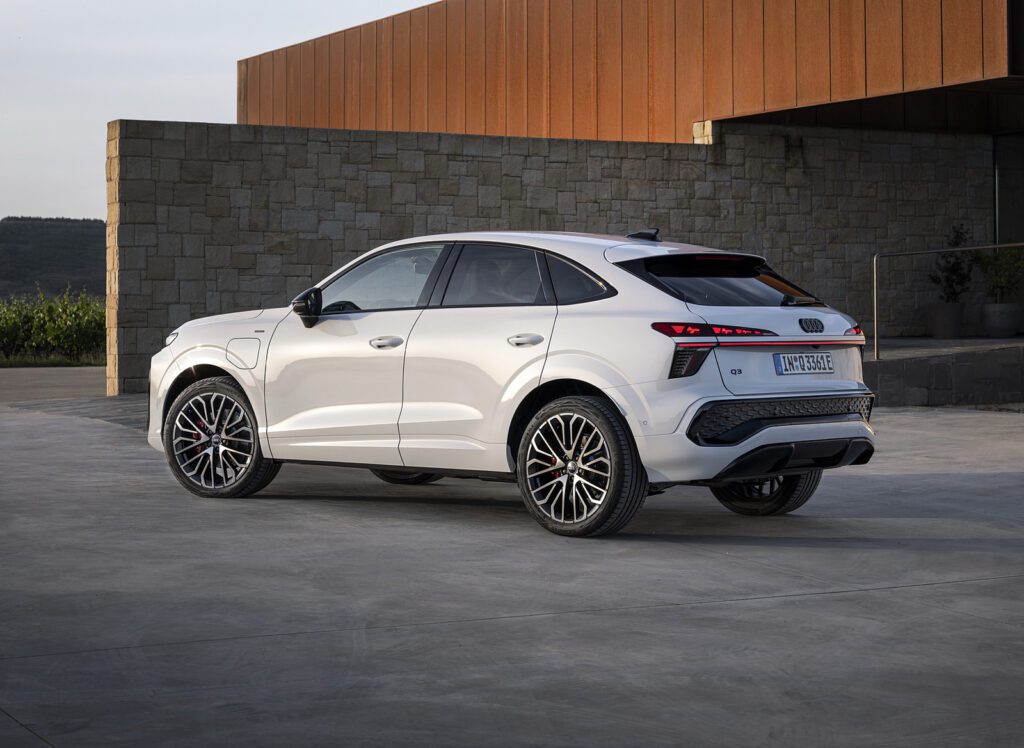
Design, aero, and that sloping roof
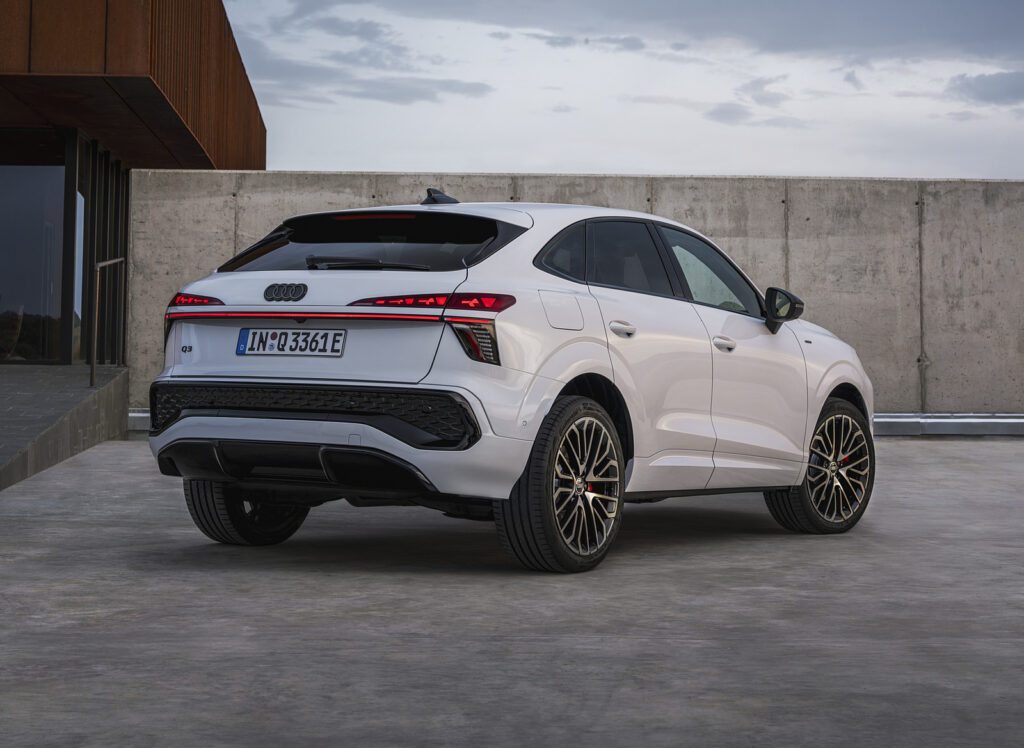
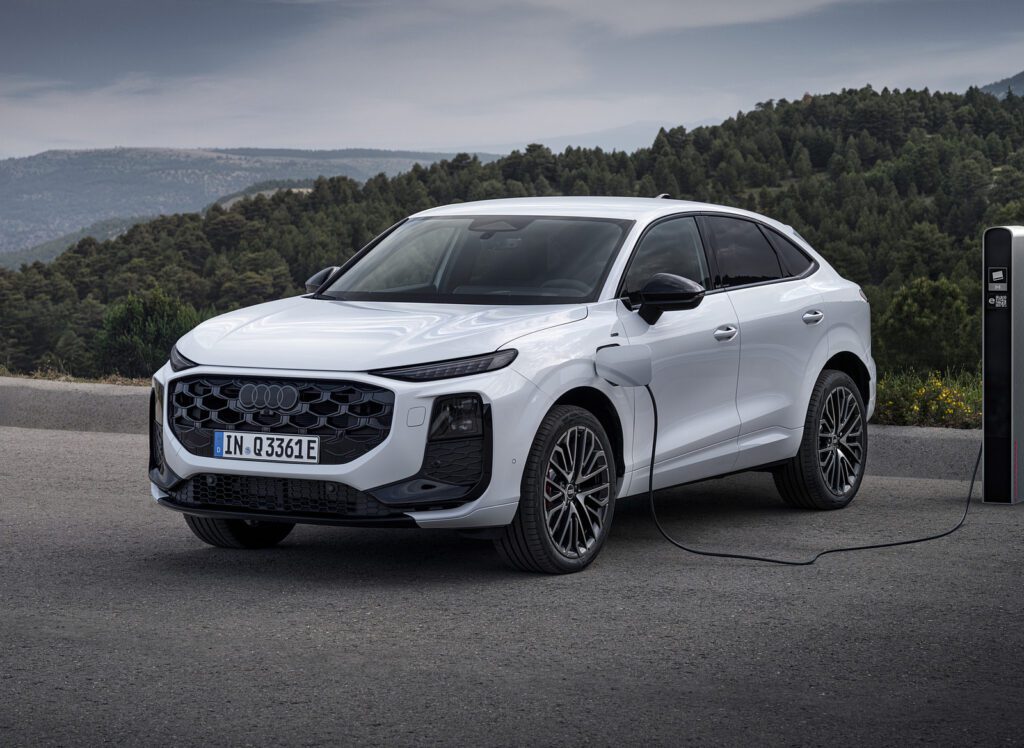
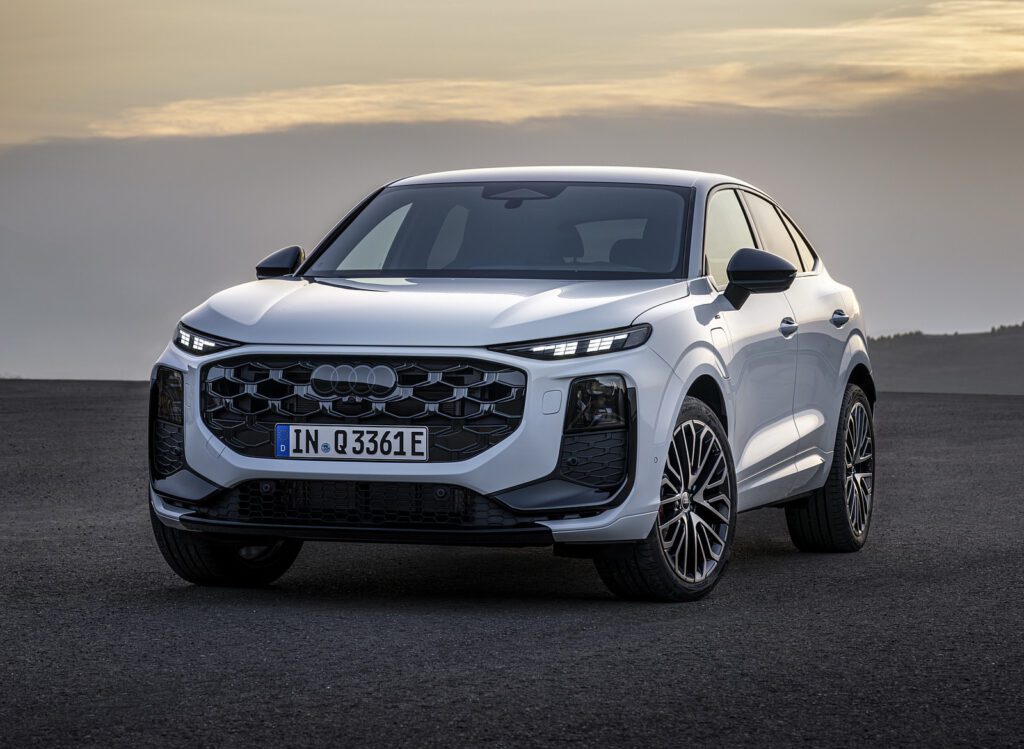
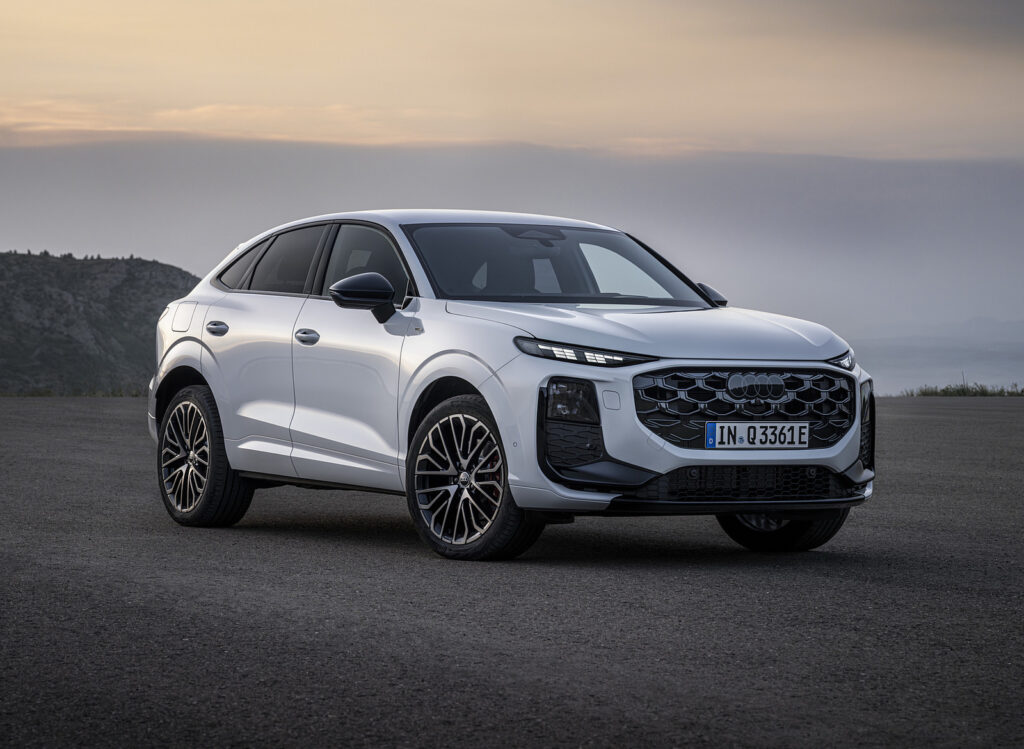
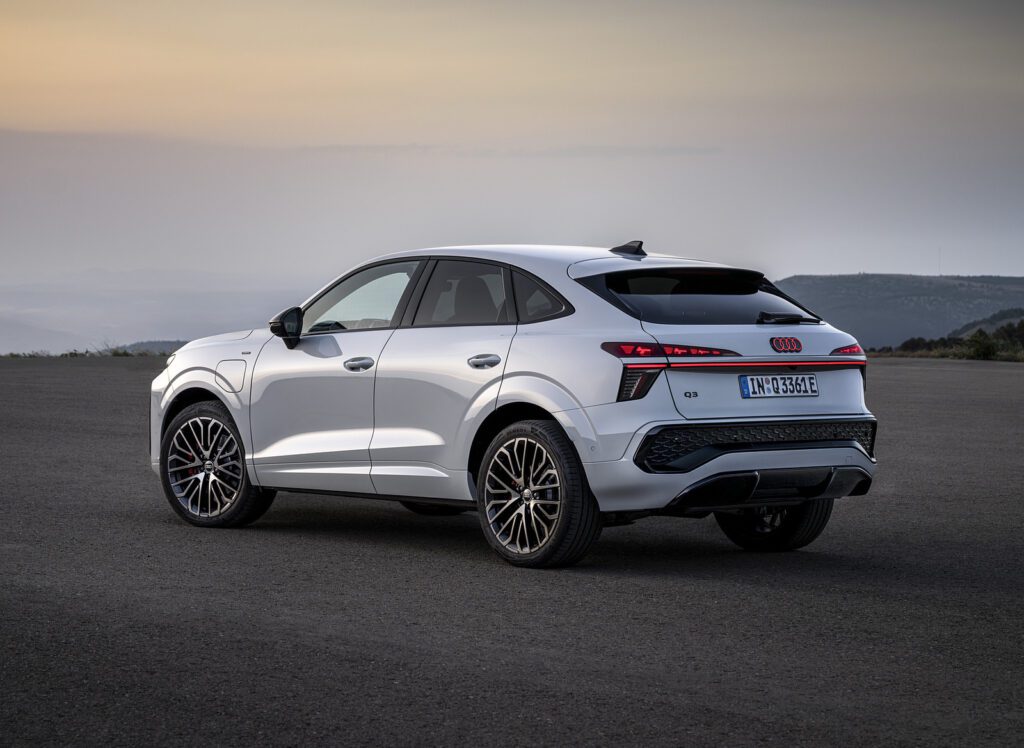
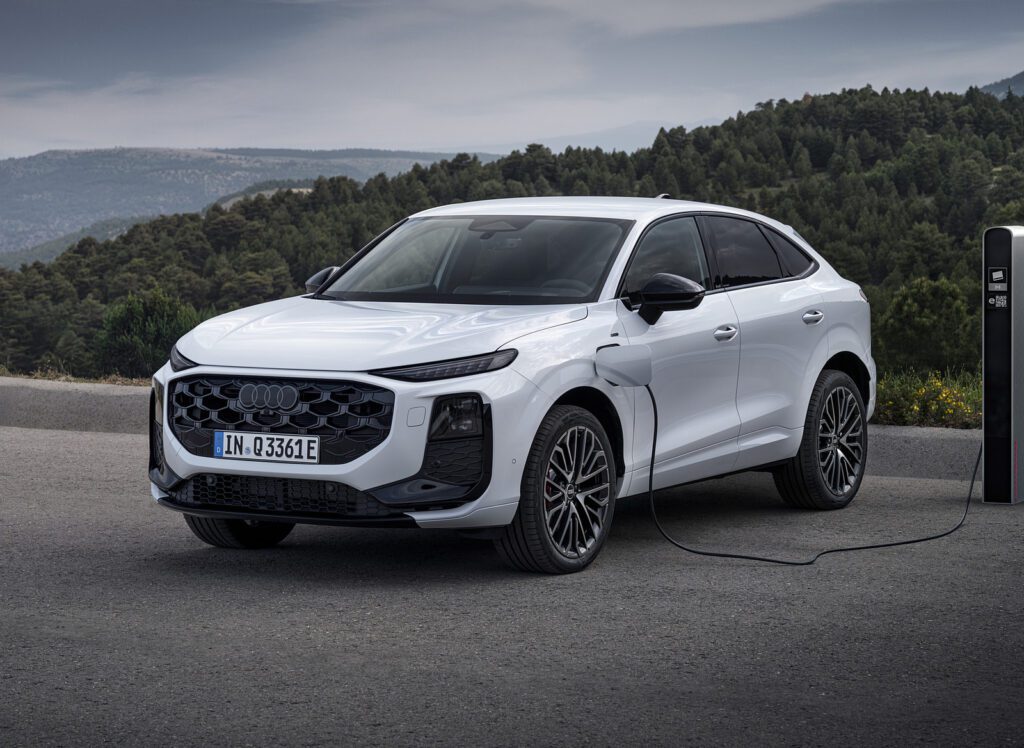
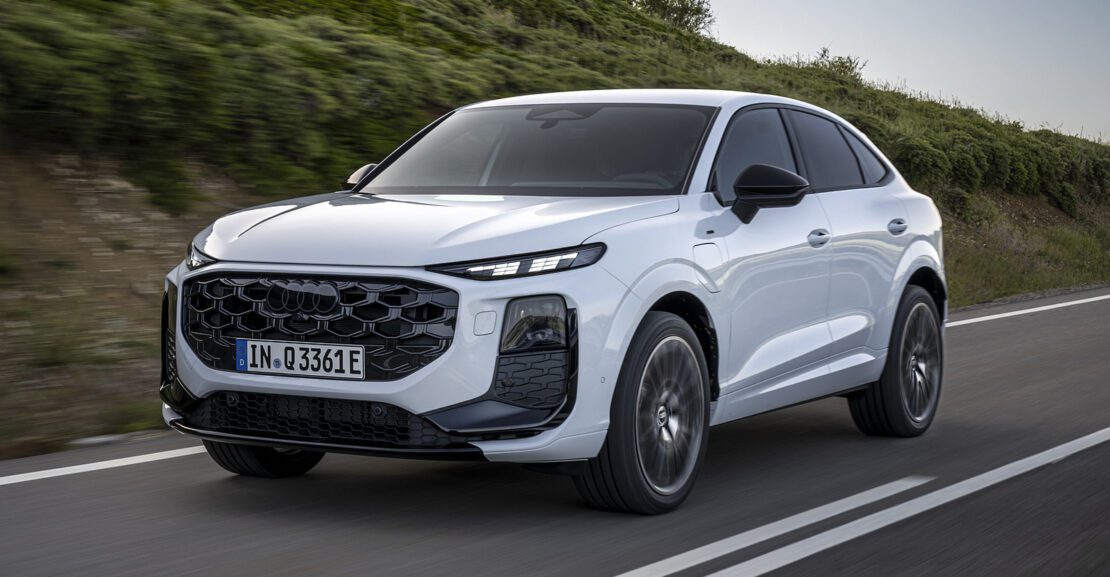
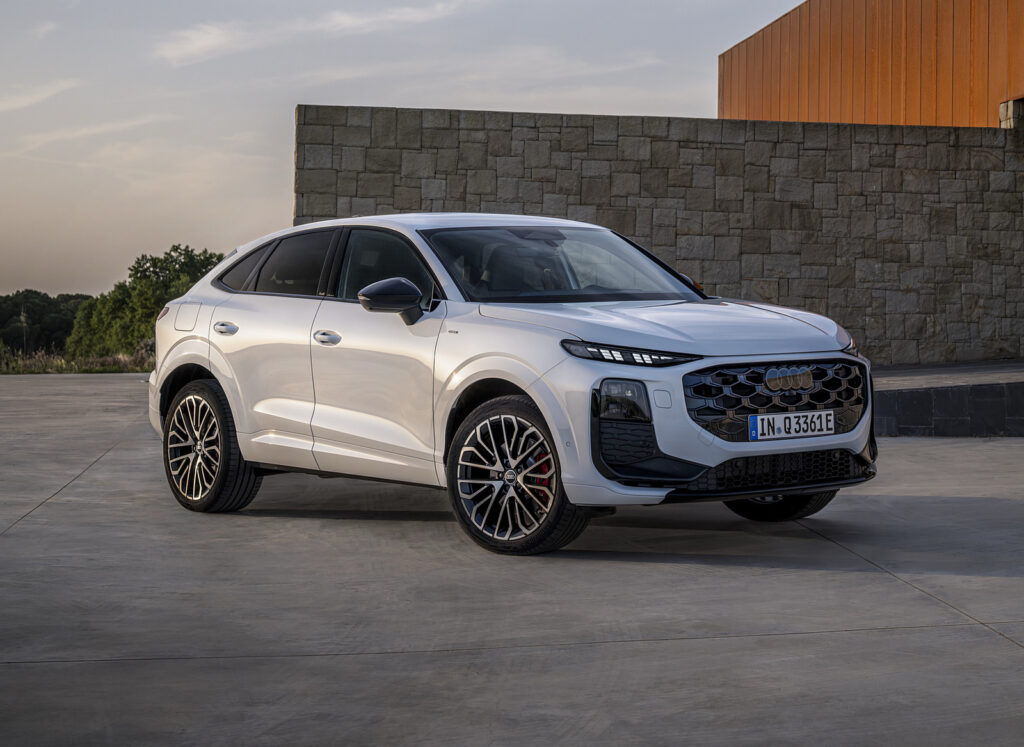
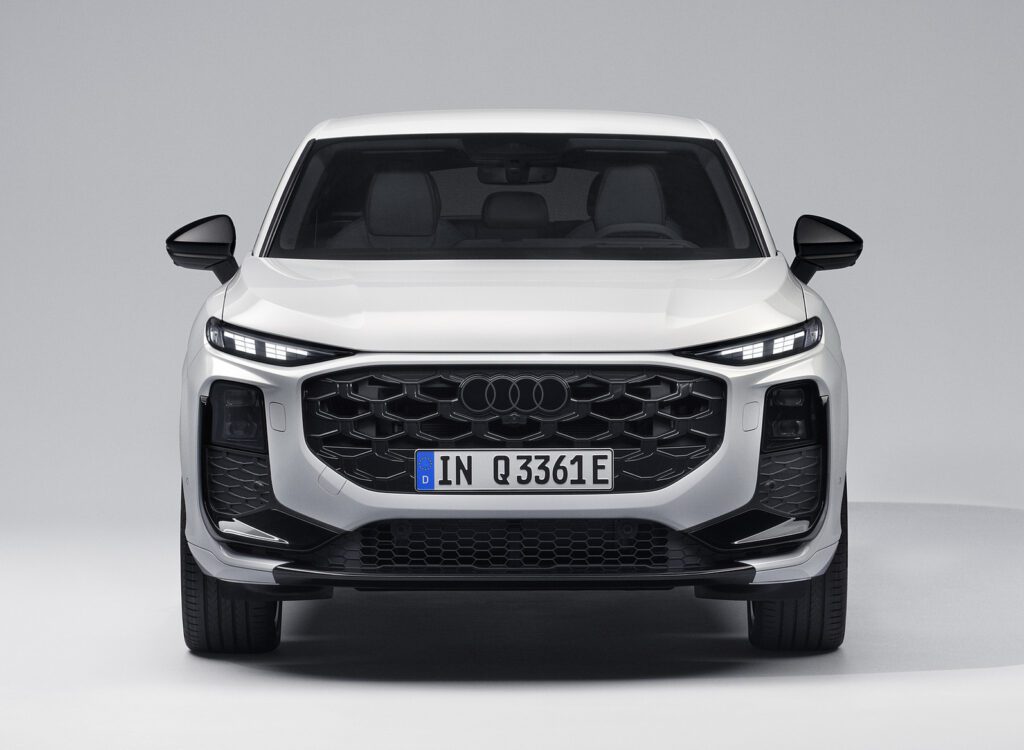
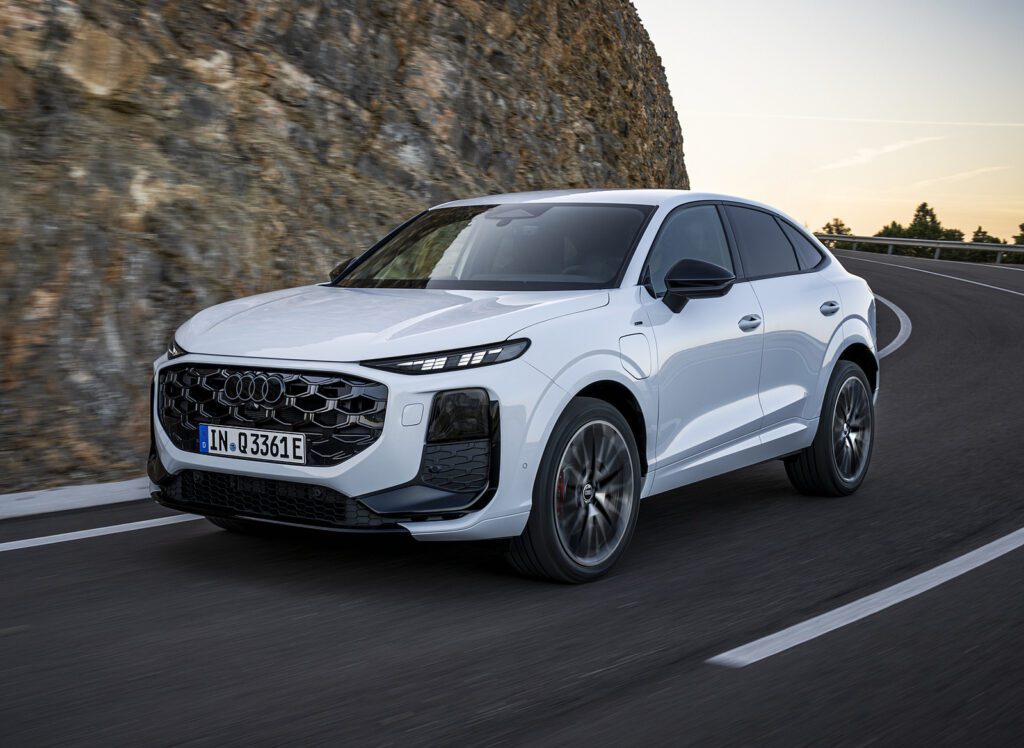
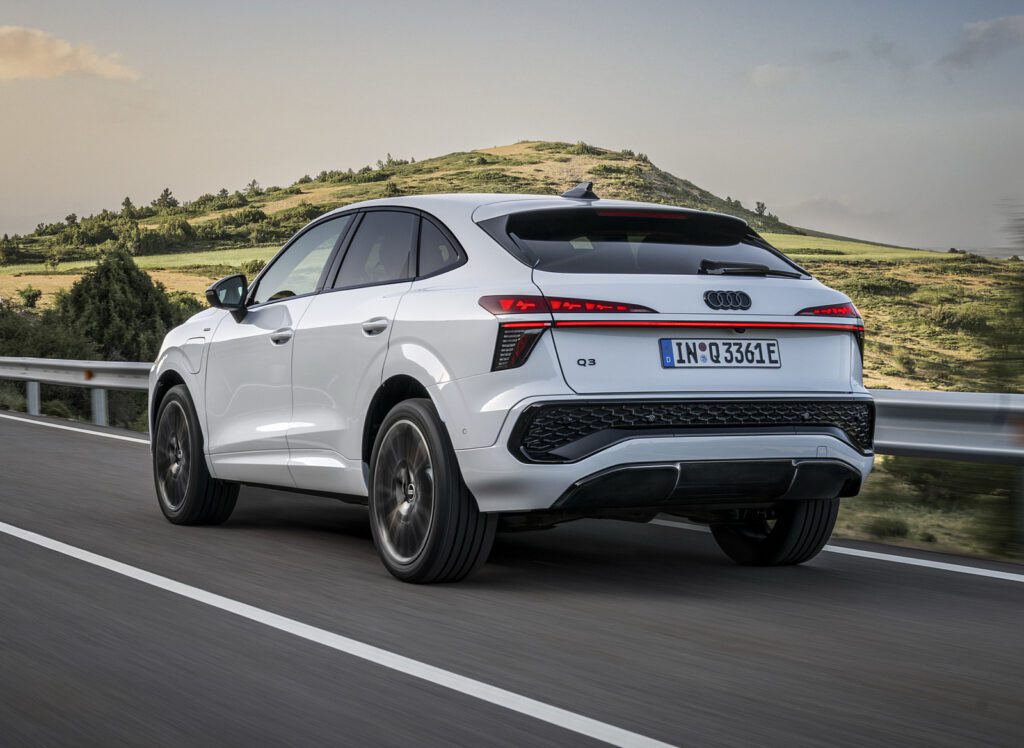
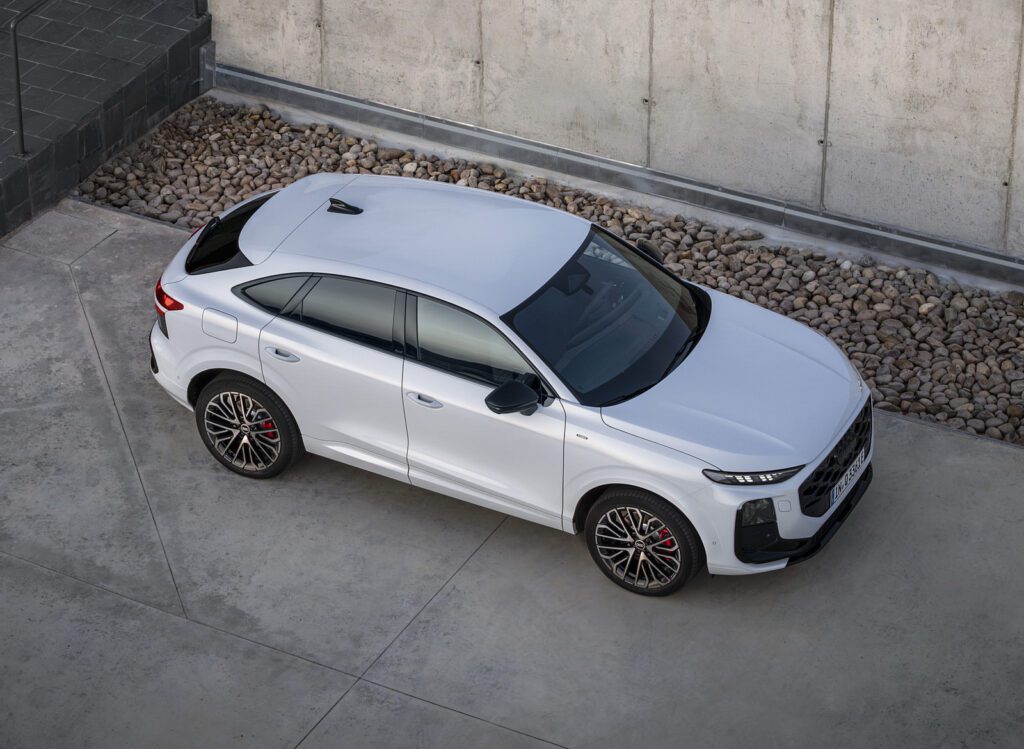
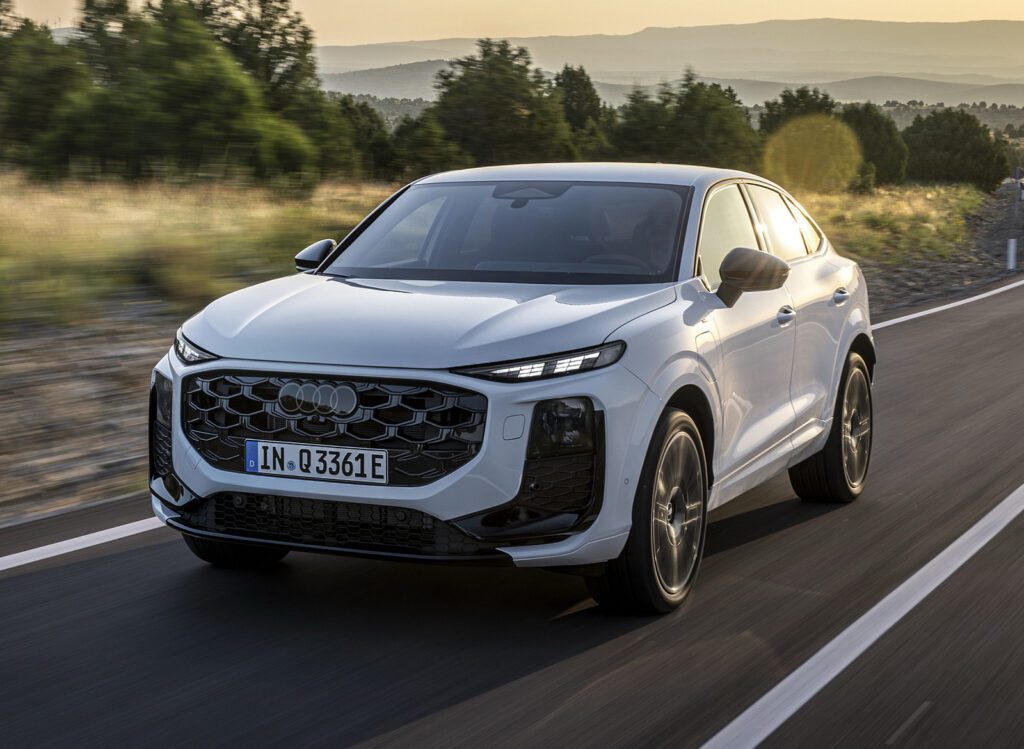
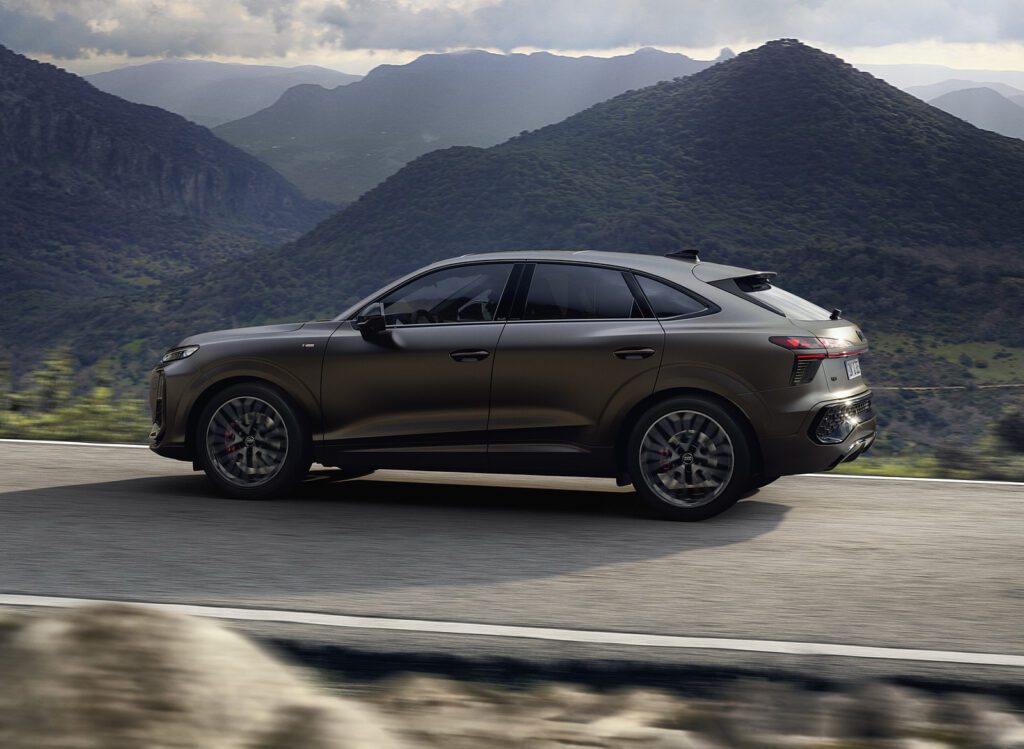
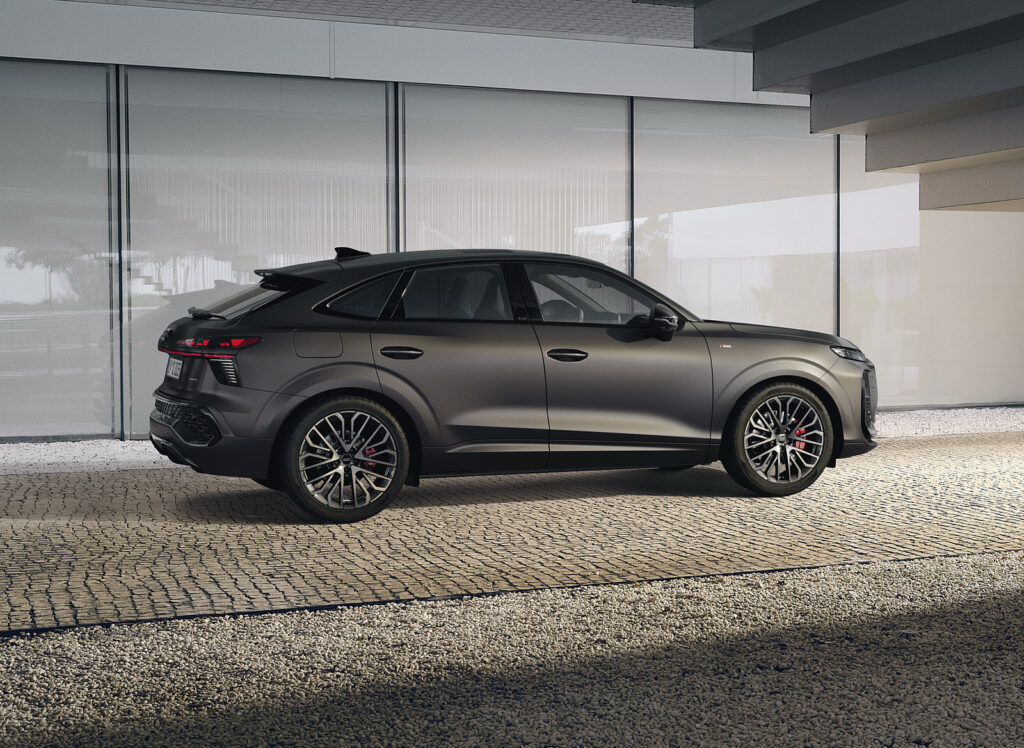
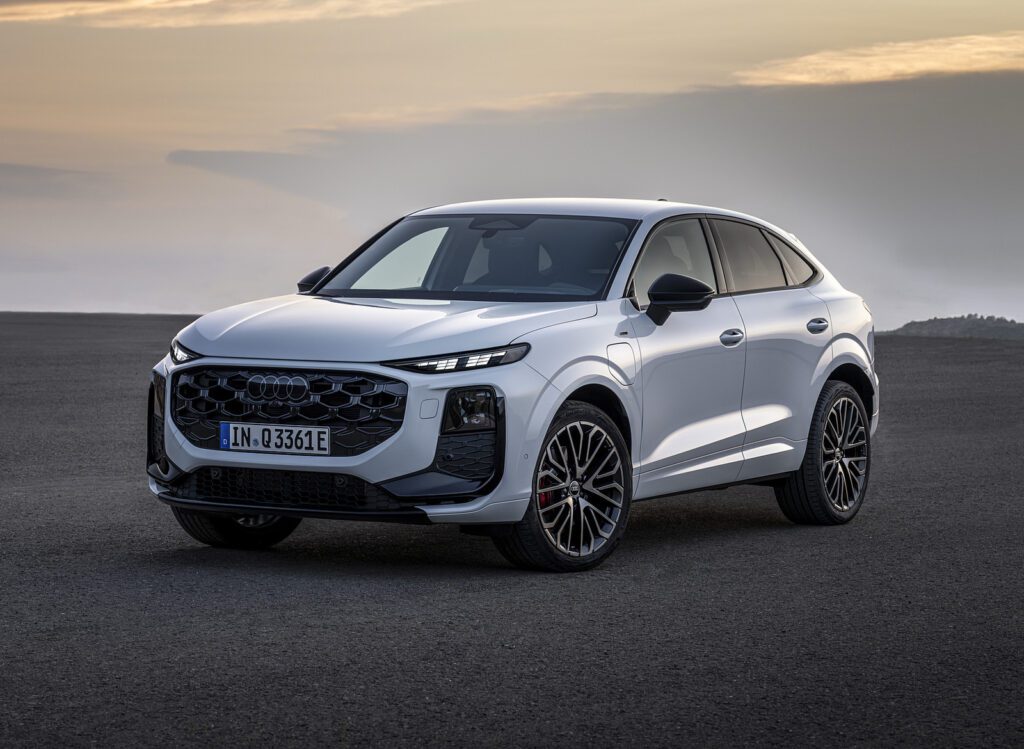
Audi emphasizes clean surfacing on the new Q3 Sportback. The grille stretches wide and high, flanked by slim lamps pressed close to the body, while the subtly flared “quattro” shoulders add stance without excess. A single shoulder line carries light and shadow down the side, and airflow efficiency improves with a 0.30 drag coefficient, aided by an active cooling flap behind the grille and neater sensor integration within the rings.
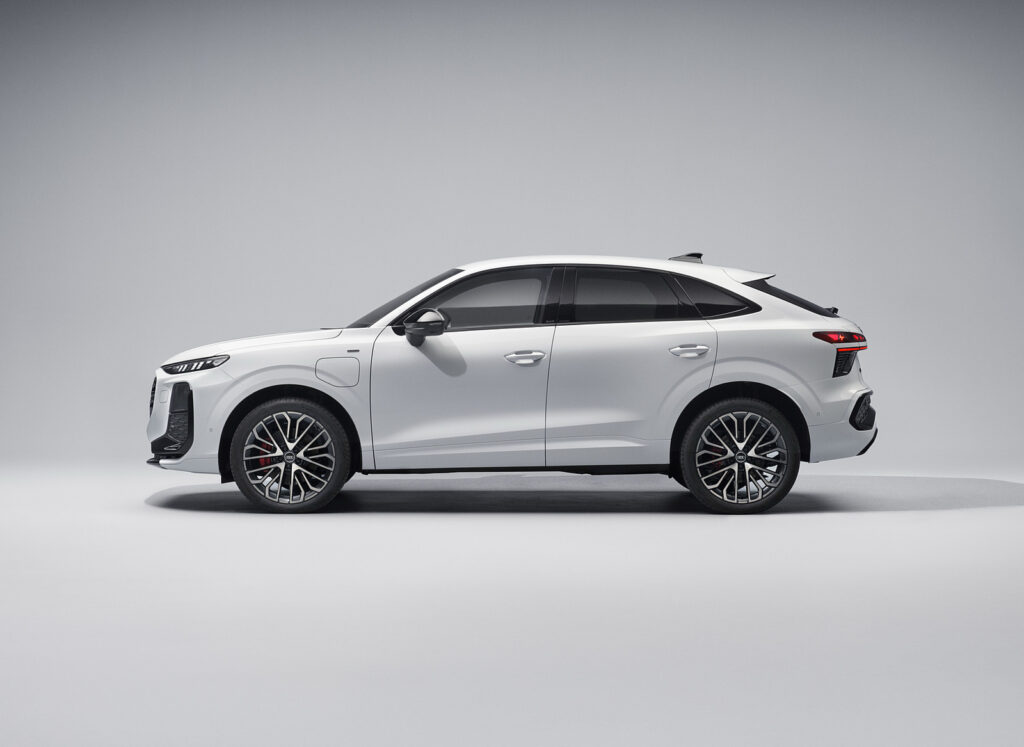
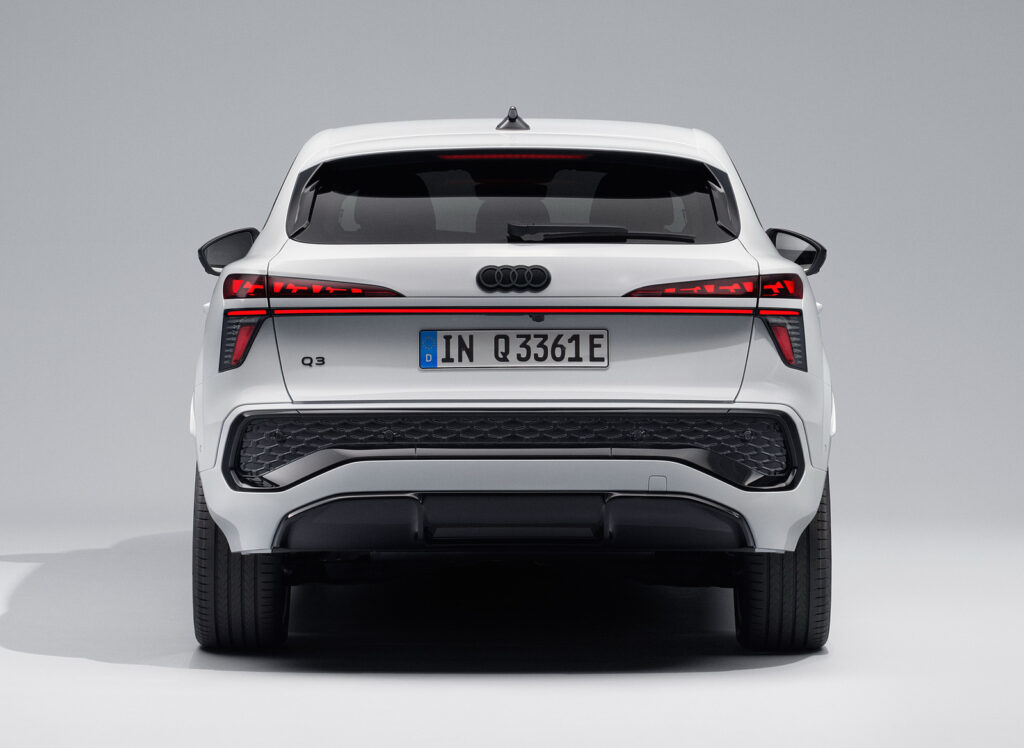
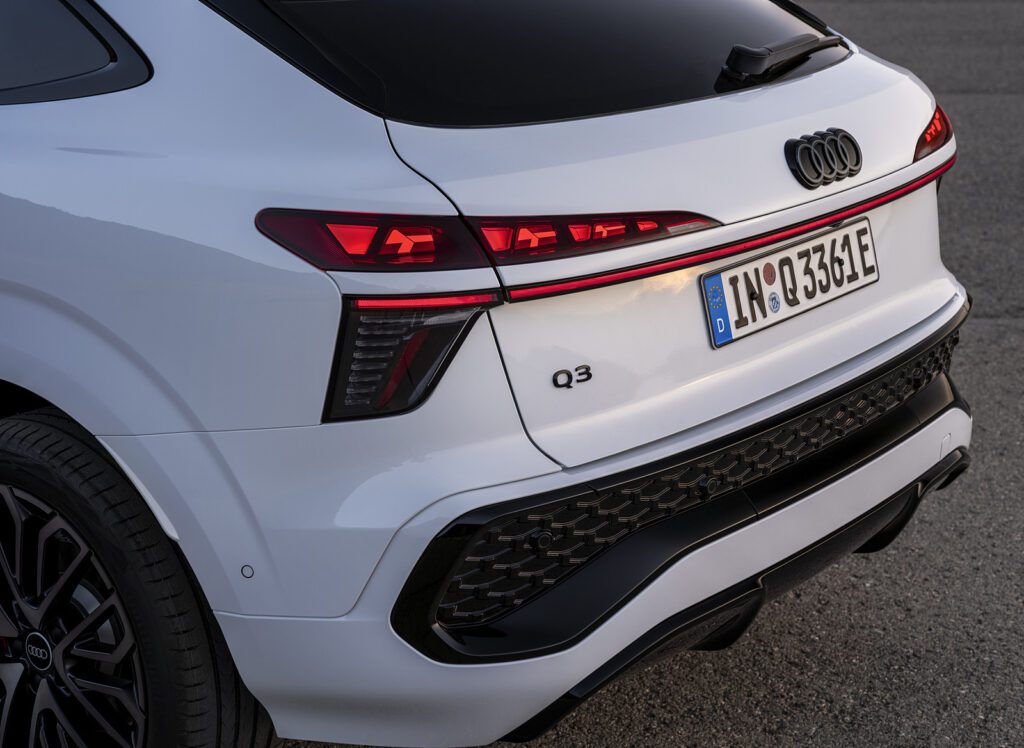
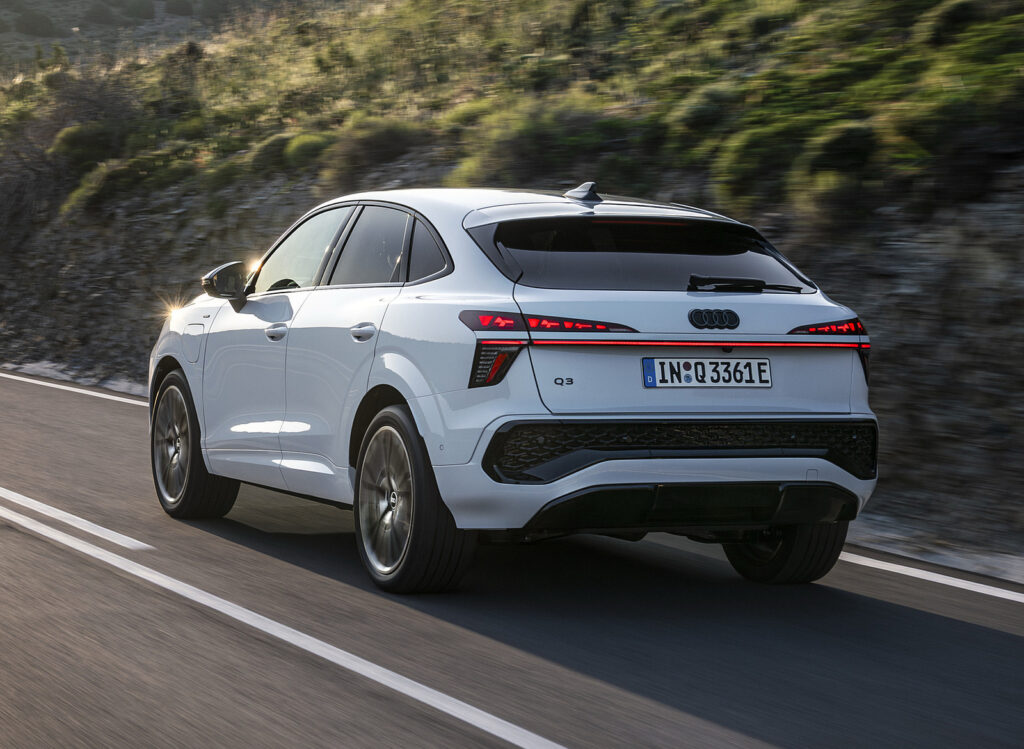
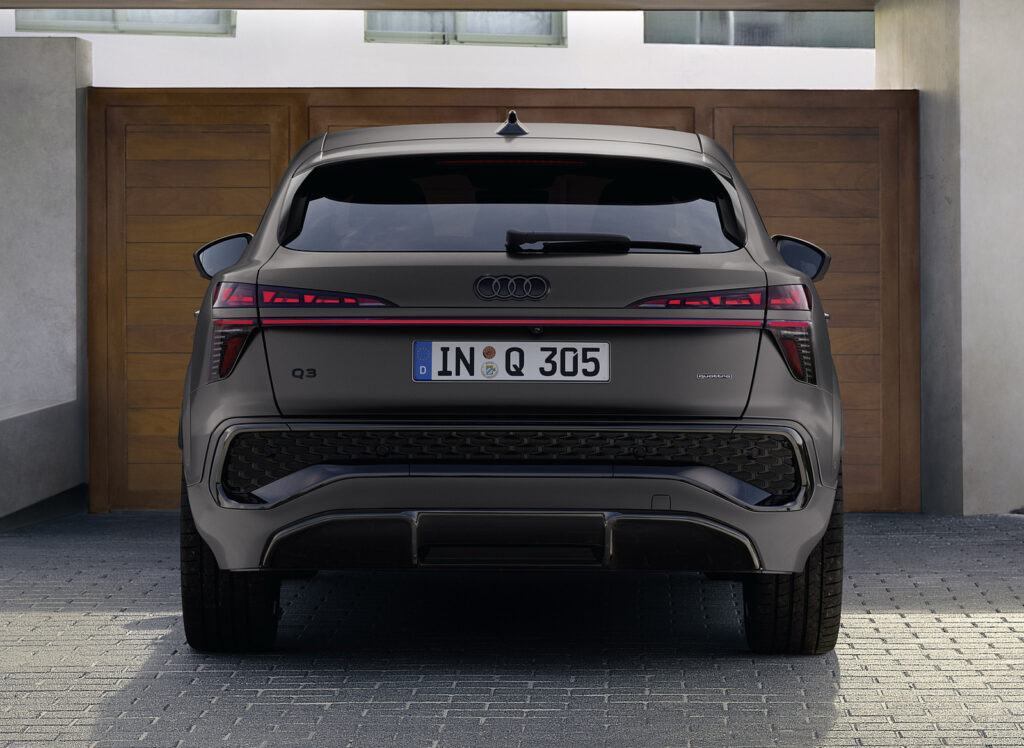
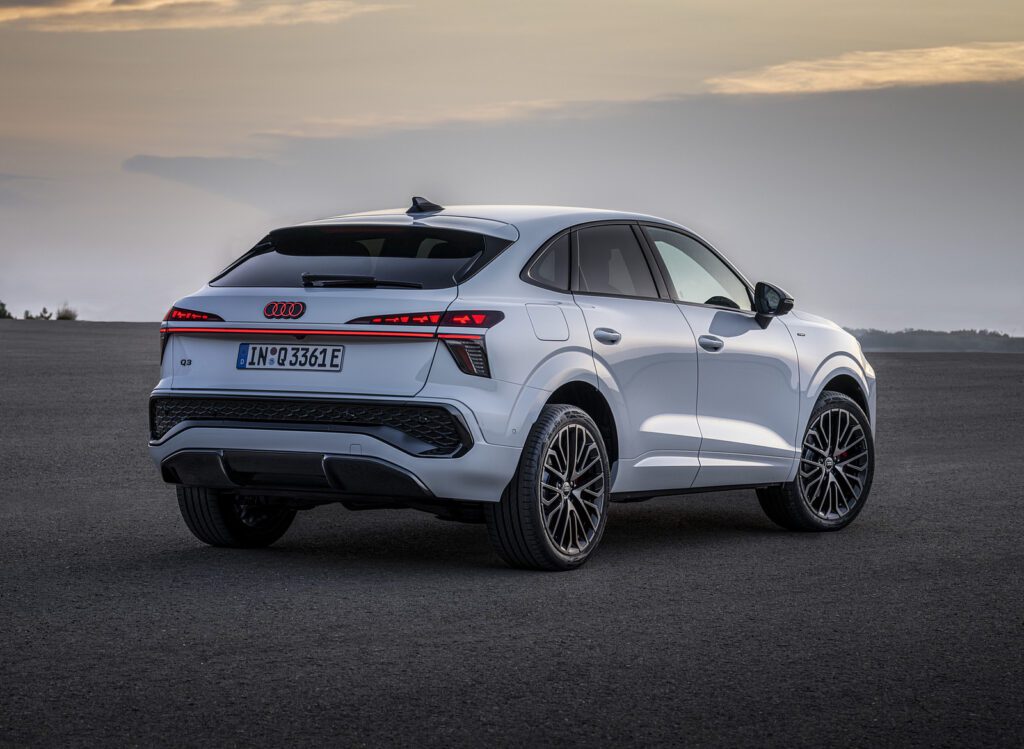
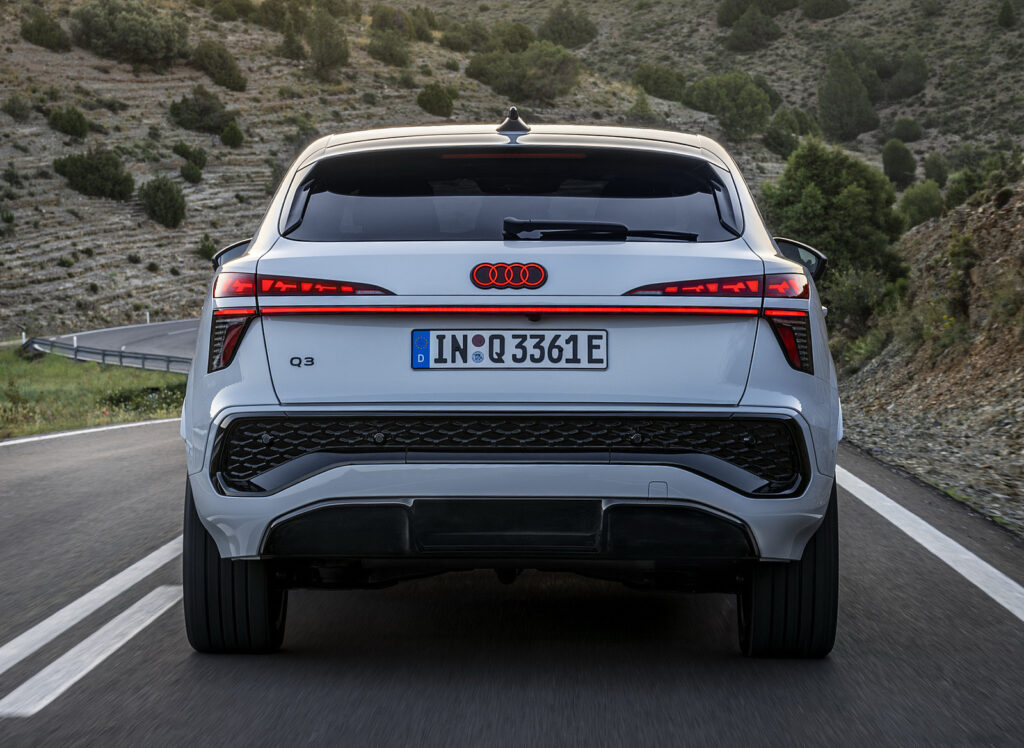
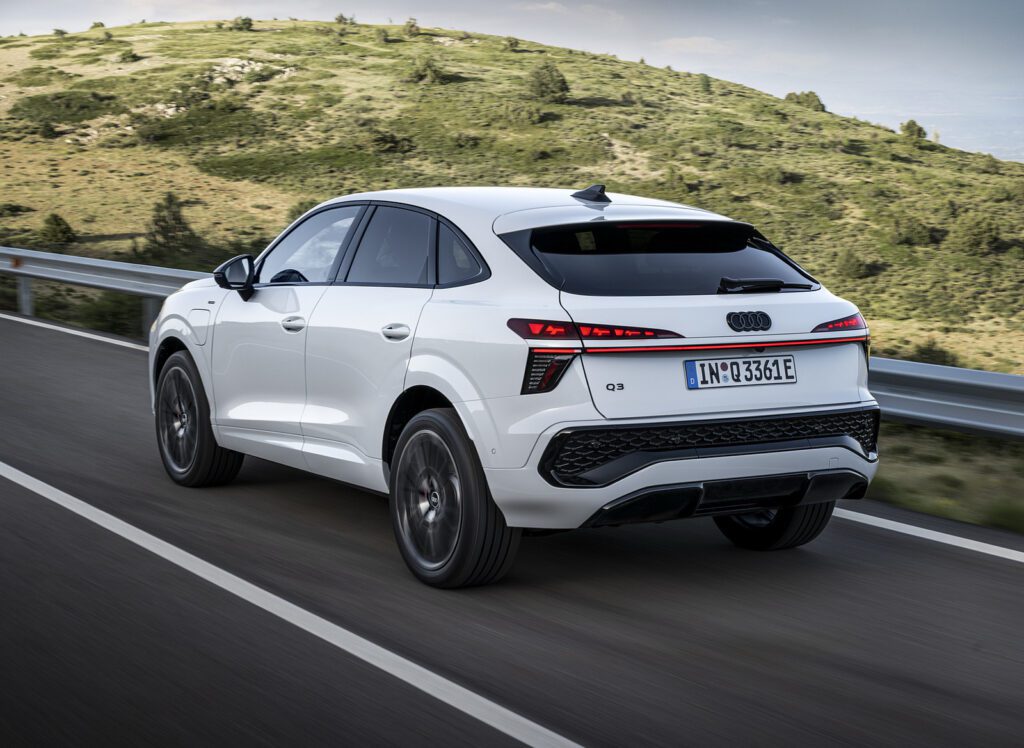
The Sportback roofline sits 29 mm (1.1 inches) lower than the Q3 SUV, its faster rear glass lending more muscle to the haunches. At the back, a full-width light bar crowns a calm, uncluttered bumper. Versus the upright SUV, the Sportback’s hatch slopes lower, the rear window rakes harder, and the diffuser looks broader—more athletic visually, though with a small trade-off in cargo space.
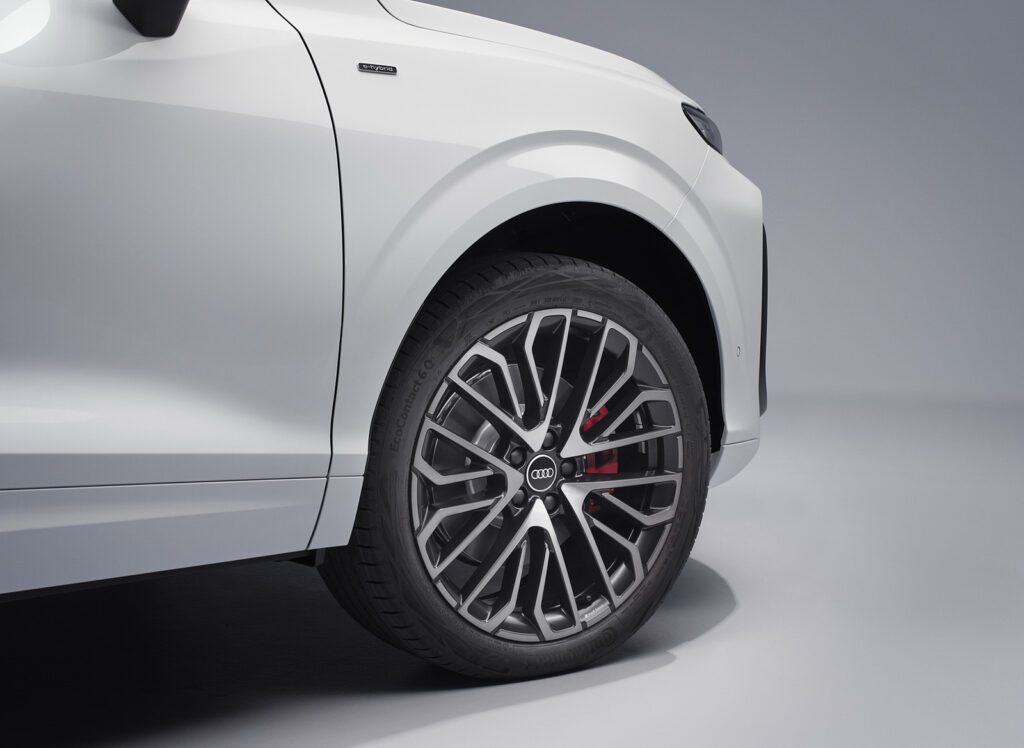
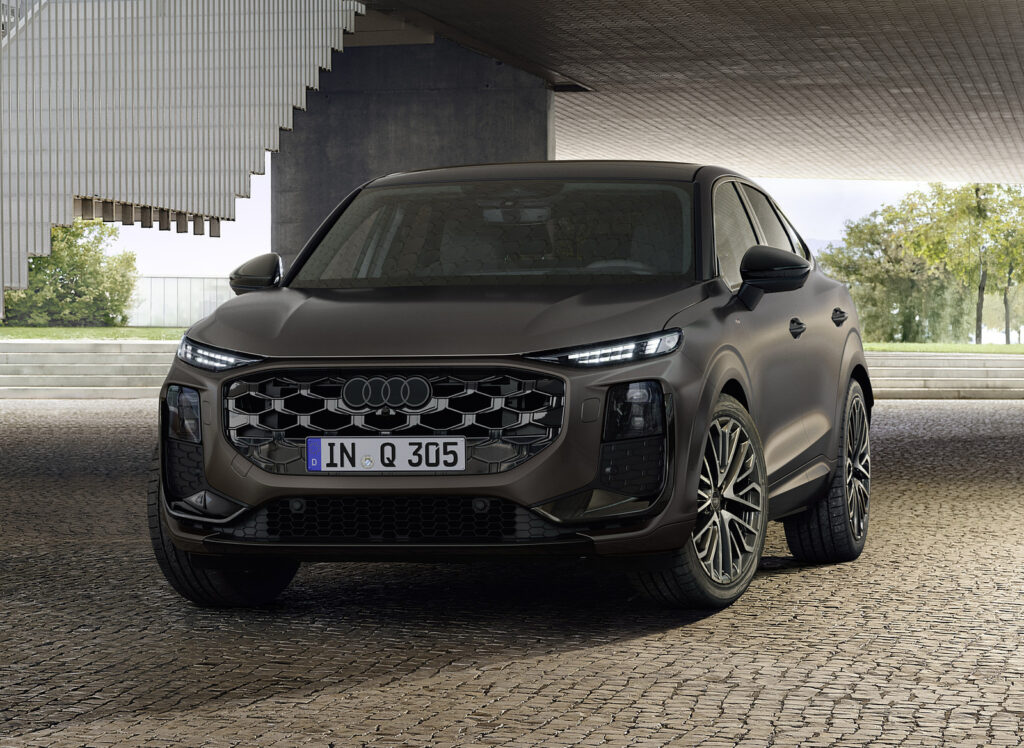
Wheels range from 17 to 20 inches, with 18s standard on the Sportback and tire widths up to 235 mm. Audi Sport contributes several darker designs, including a striking 20-inch five-arm tripod style. Eleven paint choices are offered worldwide, with Sage Green and Madeira Brown new to the palette; the latter can also be had in an exclusive matte finish. Black and selenite-silver exterior packages round out the options.
Lighting that actually assists
The standout innovation for this generation is Audi’s new micro-LED headlamp array, making its compact-class debut after appearing on larger models. Each unit houses 25,600 pinpoint emitters, delivering brighter, higher-contrast light that cuts through rain and fog more effectively. Beyond illumination, the lamps integrate with driver-assist systems: they can project lane markers, highlight an unintended lane departure, or flash a blind-spot warning inside the lane light when overtaking. In construction zones, the beam narrows to trace the correct path, and at highway speeds it can even display an icy-road symbol as a heads-up.
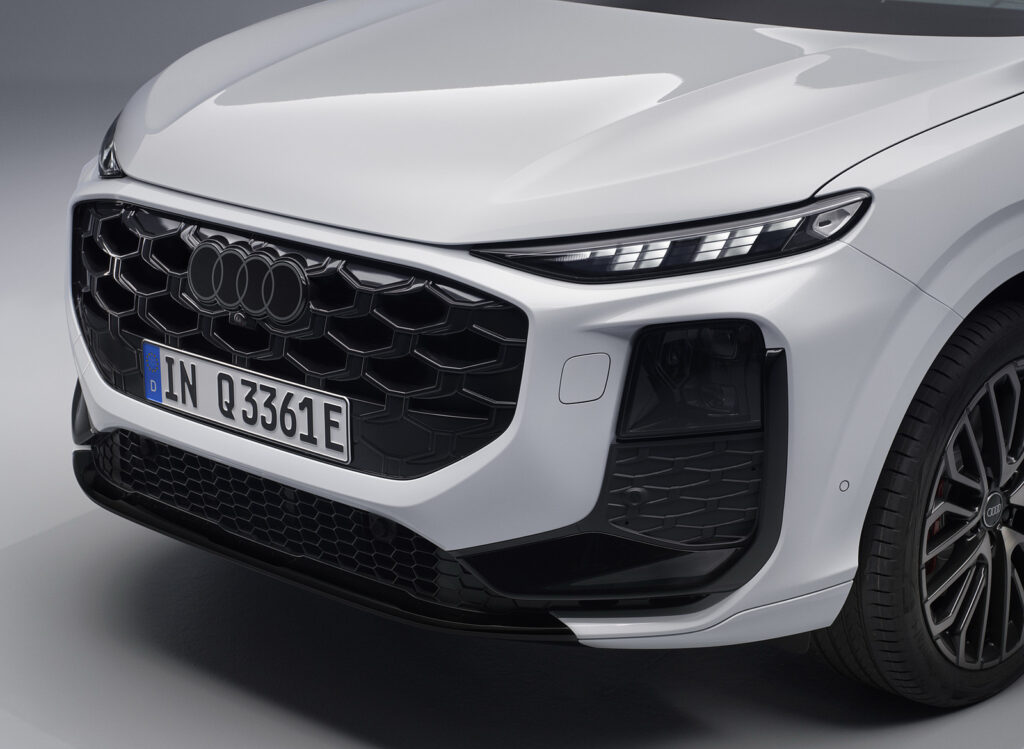
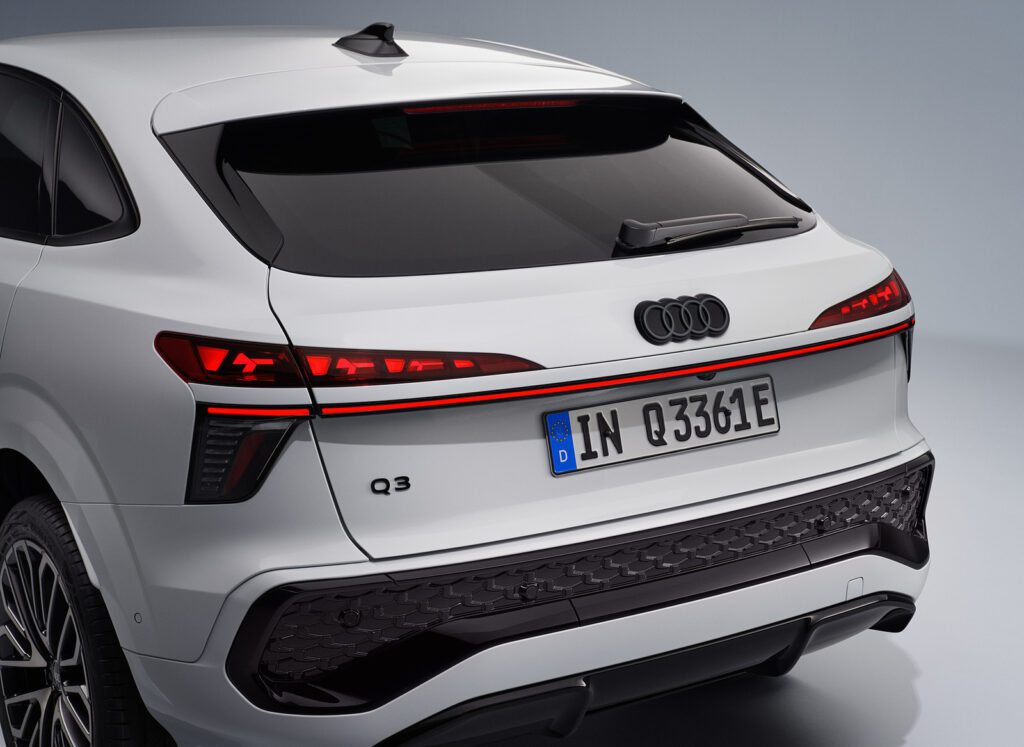
Personalization comes through the MMI, where owners can pick from four daytime running light signatures, several welcome and farewell animations, and choose which guidance functions stay active. At the rear, optional digital OLED lamps split 36 segments across six panels, allowing for distinct lighting patterns. With the low beams on, Audi’s signature rings illuminate as well, giving the Sportback a high-tech glow front to back.
Cabin rethink trades the shifter for space
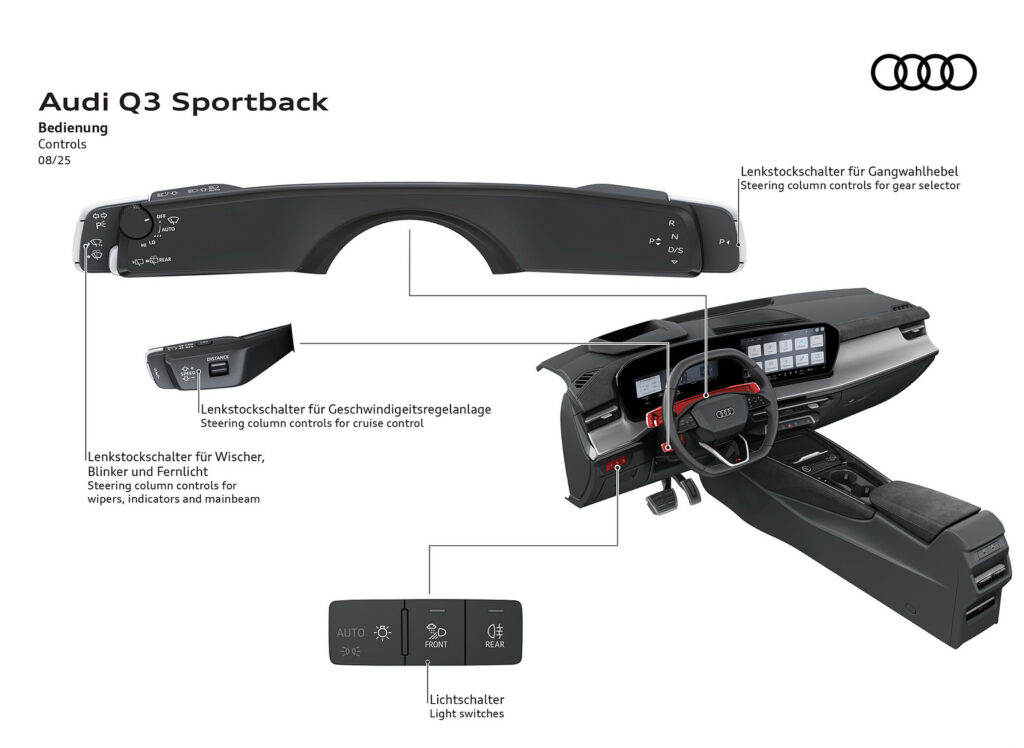
Inside, the Q3 Sportback adopts a clean, twin-screen setup: an 11.9-inch digital cluster paired with a 12.8-inch central touchscreen, backed by an optional head-up display. The gear selector shifts to a stalk on the right side of the steering column, mirrored by a left stalk for wipers and lighting. Freeing the center console creates space for two proper cupholders, a covered 15-watt wireless charging tray with active cooling, and dual USB-C ports—plus two more for rear passengers. Flush door handles and a simplified dashboard design lend the cabin a calmer, less fussy feel.
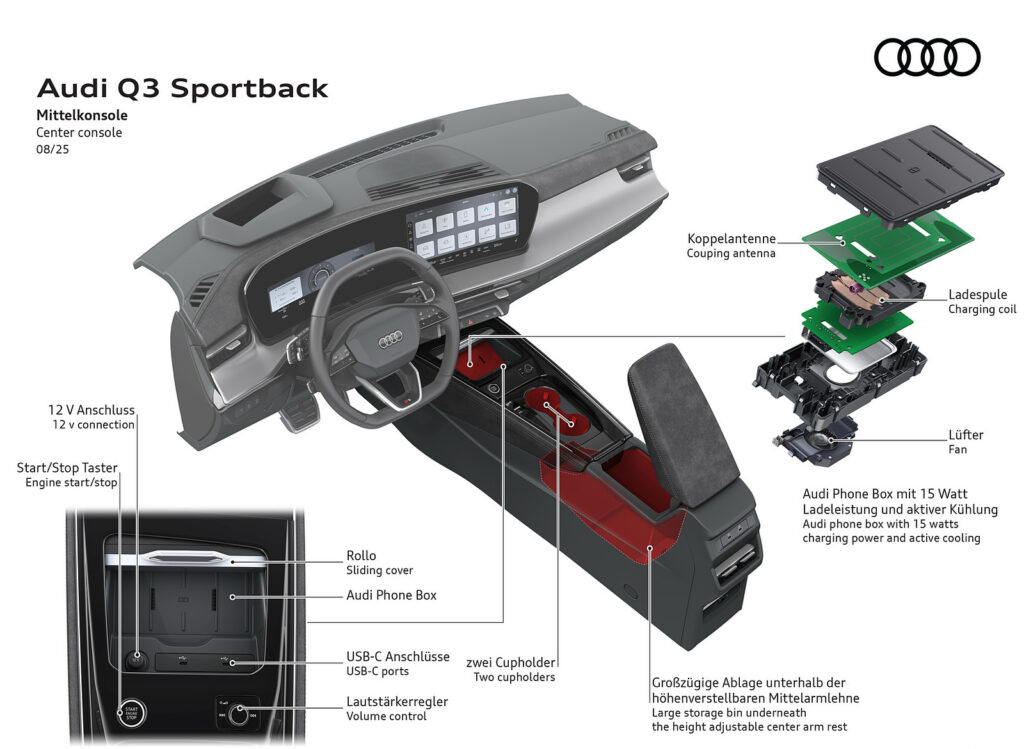
Ambient lighting spans 30 colors, and an optional illuminated fabric panel—laser-cut some 300 times—adds layered graphics in the front doors, complete with animated lock/unlock sequences. Audio comes via an optional 12-speaker, 420-watt SONOS premium system with four sound profiles. Additional features, including bass boost, level balancing, and a “revive compressed tracks” mode, can be unlocked later through Audi’s Functions on Demand program.
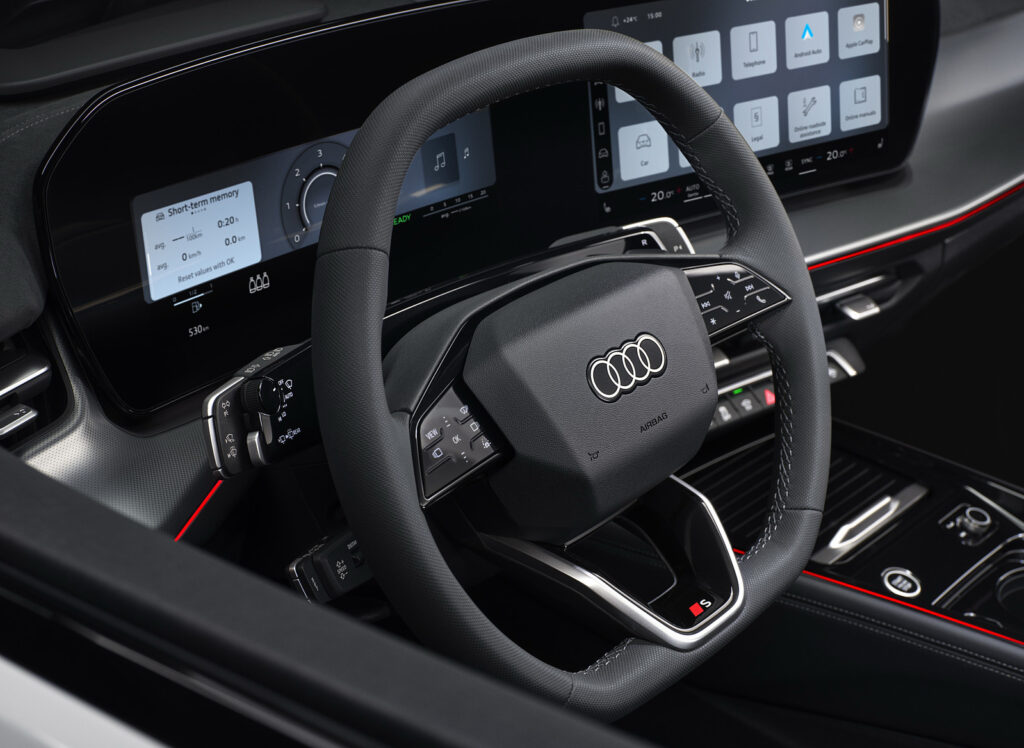
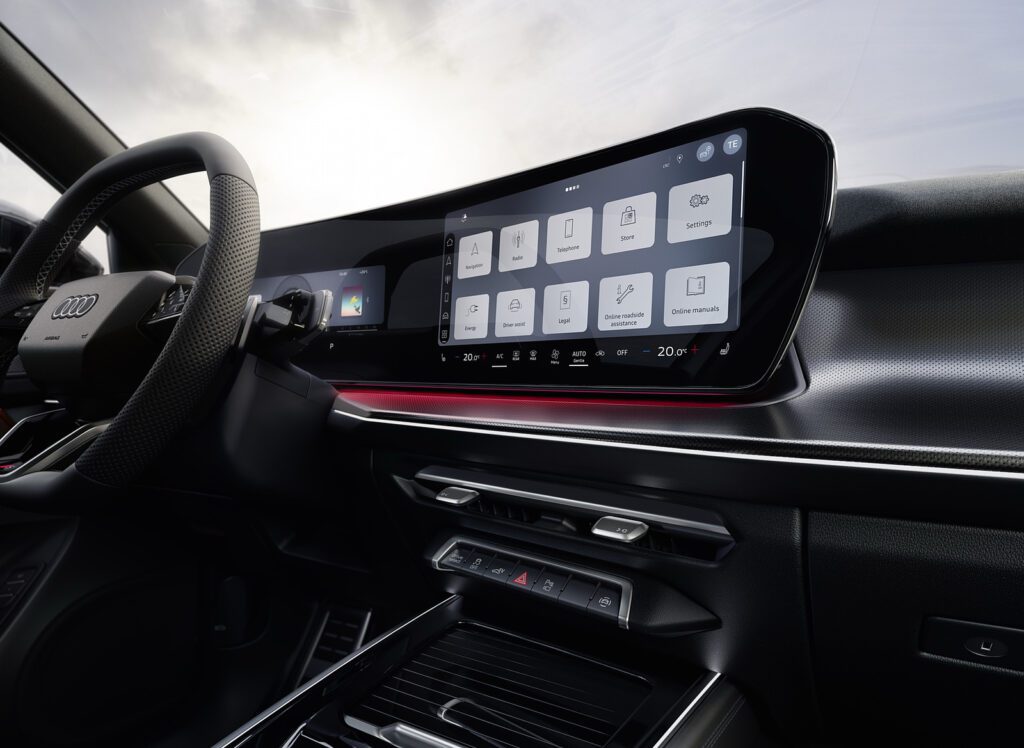
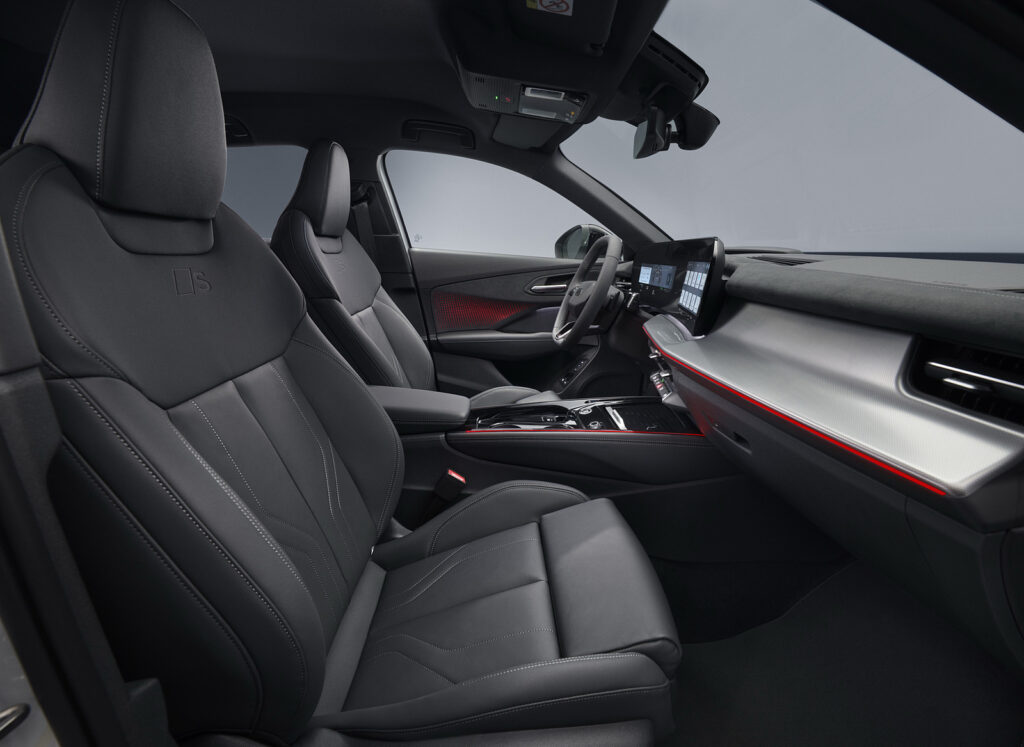
Infotainment now runs on Android Automotive OS, with the Audi Application Store integrated directly into the car—so apps like YouTube run natively, no phone required. A new learning voice assistant, represented by an on-screen avatar, ties into the cluster and head-up display. It’s slick, though buyers wary of app-store creep may find it a bit much.
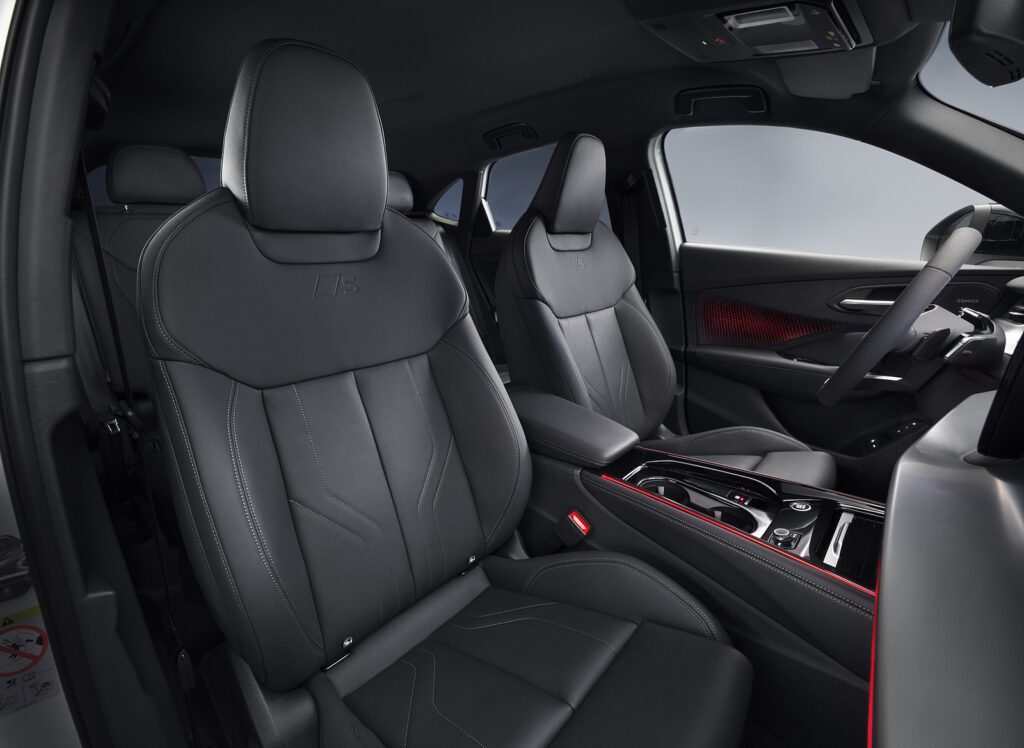
Noise control also improves: optional acoustic glazing for the front side windows, a first for Audi’s compact models, sandwiches a PVB film between the panes. Materials lean greener too, with several seat fabrics and trims using recycled polyester, and floor mats made from Econyl—nylon sourced from reclaimed fishing nets and carpet waste.
Space, towing, and everyday usefulness
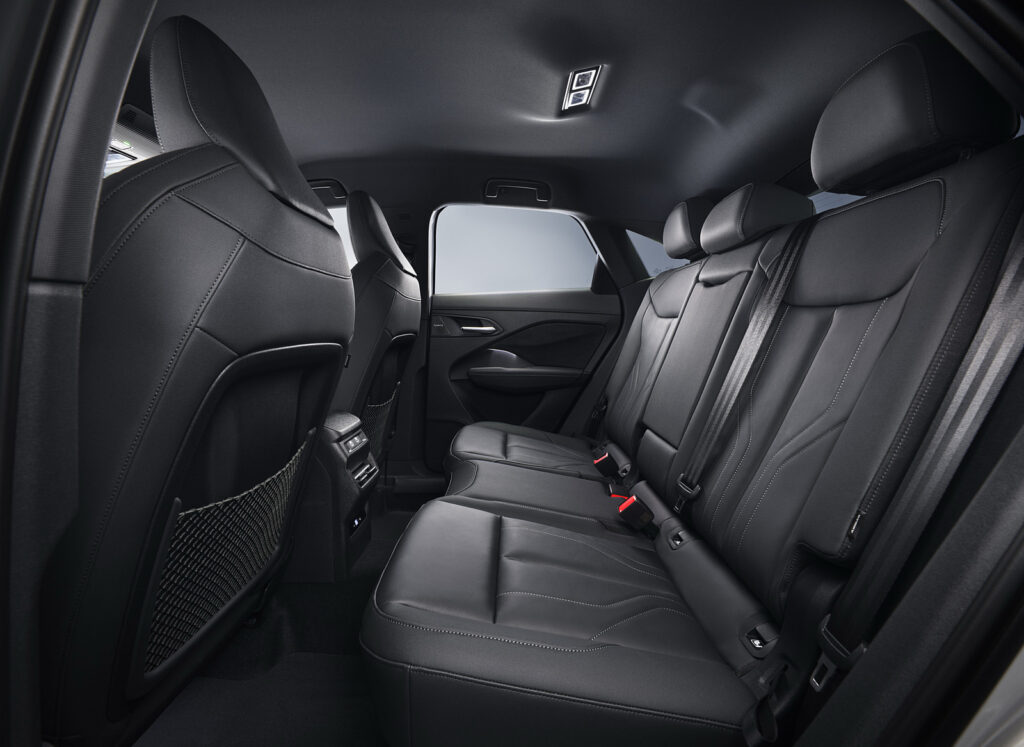
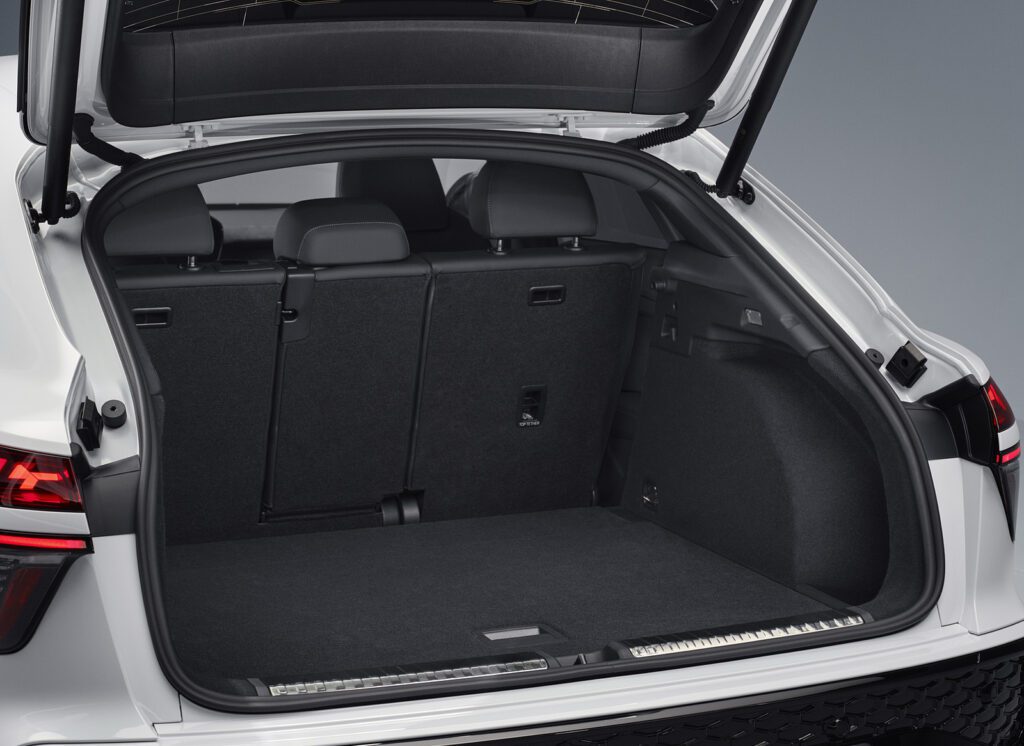
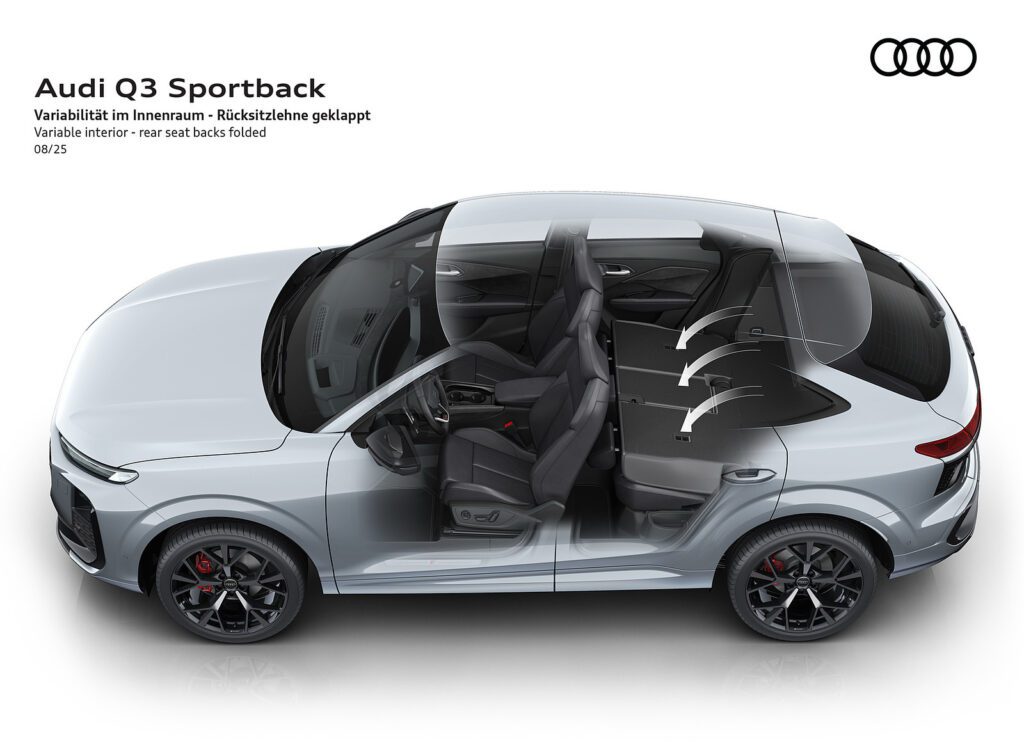
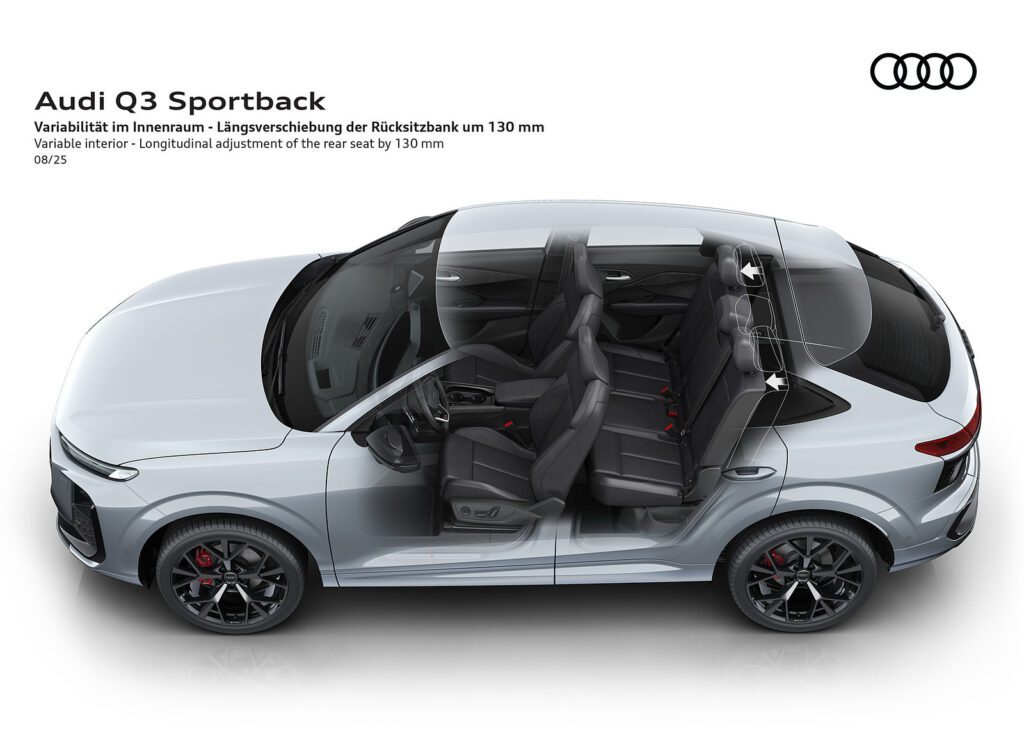
Even with its lower roofline, the 2026 Audi Q3 Sportback doesn’t sacrifice utility. Cargo space measures 17.2 cubic feet behind the second row, expanding to 45.5 cubic feet when the bench is folded. That bench also slides and reclines as standard, making the rear more flexible for passengers or gear. Towing capacity tops out at 4,630 pounds with a 198-pound tongue weight, and the low load floor helps keep everyday hauling or weekend projects hassle-free.
Engines and performance, including a stronger plug‑in
The third-generation Q3 Sportback offers a broad powertrain lineup, ranging from mild-hybrid gas engines to a diesel for select markets, plus a significantly improved plug-in hybrid. U.S. specs will follow, but the global range looks like this:
- 1.5-liter turbo four with 48-volt mild hybrid (FWD, 7-speed dual-clutch): 150 PS (148 hp), 184 lb-ft. Factory 0–100 km/h in 9.1 seconds (roughly 0–60 mph in the high 8s). Top speed: 129–130 mph. Cylinder deactivation shuts down two cylinders under light load.
- 2.0-liter turbo four (quattro): 204 PS (201 hp), 236 lb-ft. 0–100 km/h in 7.1 seconds (about 0–60 mph in the high 6s). Top speed: 142 mph.
- 2.0-liter turbo four (quattro): 265 PS (261 hp), 295 lb-ft. 0–100 km/h in 5.7 seconds (mid-5s to 60 mph). Electronically limited to 149 mph.
- 2.0-liter TDI diesel (FWD): 150 PS (148 hp), 266 lb-ft. 0–100 km/h in 9.2 seconds; 129 mph top speed. Unlikely for the U.S. market.
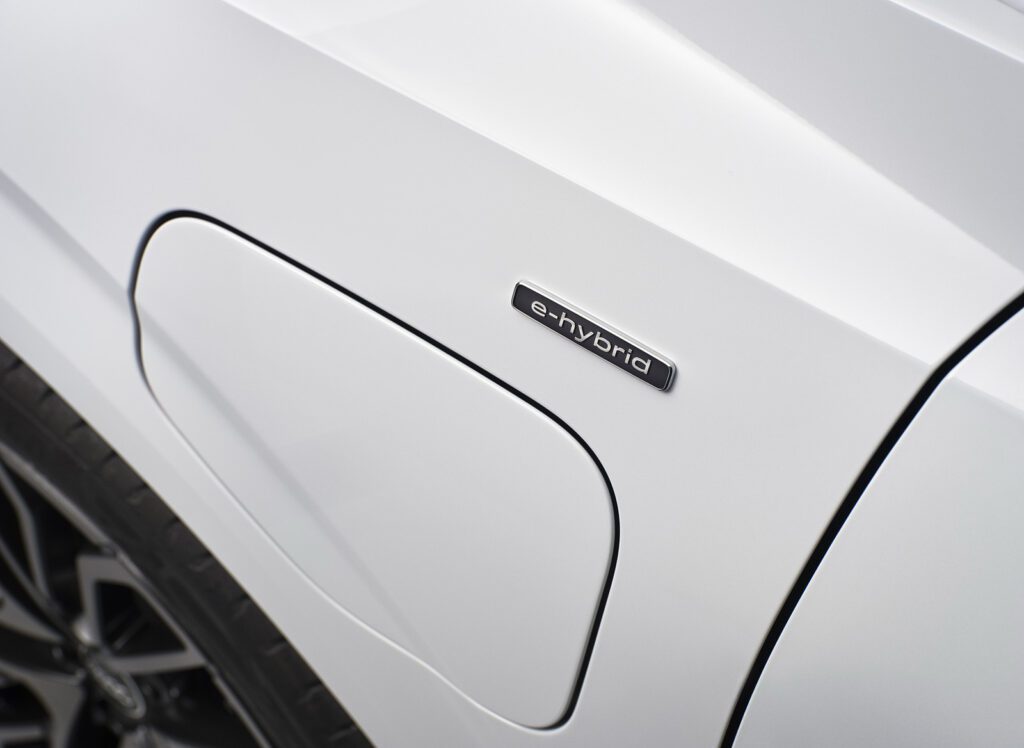
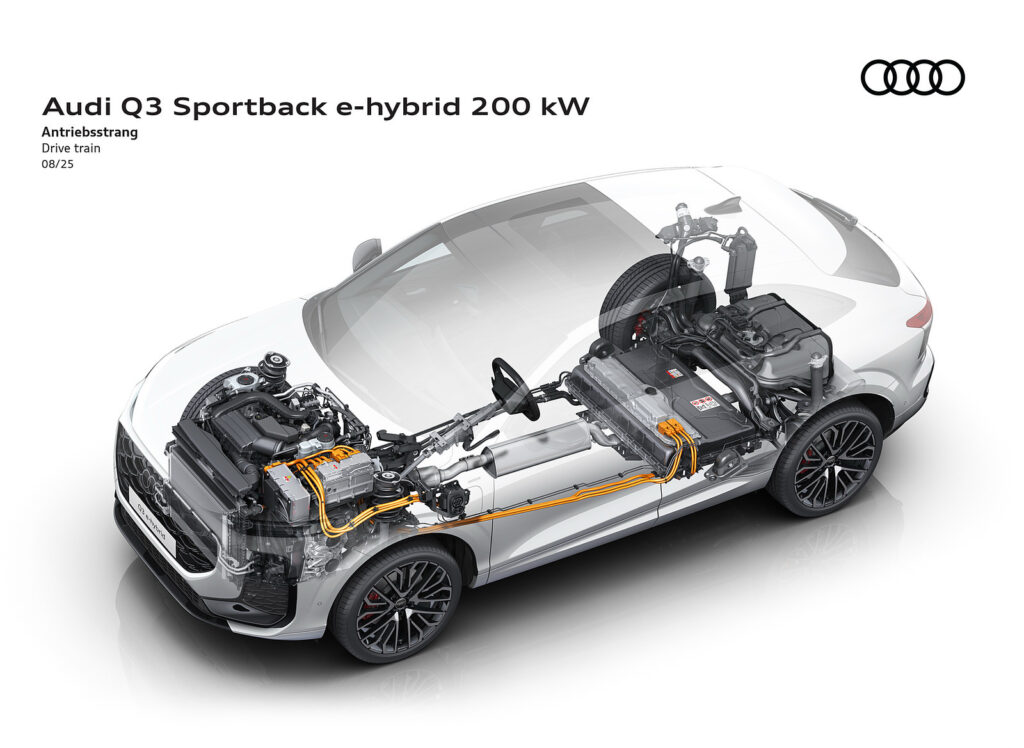
- Q3 Sportback e-hybrid plug-in: Combines a 1.5-liter turbo (177 PS) with an electric motor for 272 PS (268 hp) and 295 lb-ft. 0–100 km/h in 6.8 seconds (mid-6s to 60 mph), 134-mph top speed.
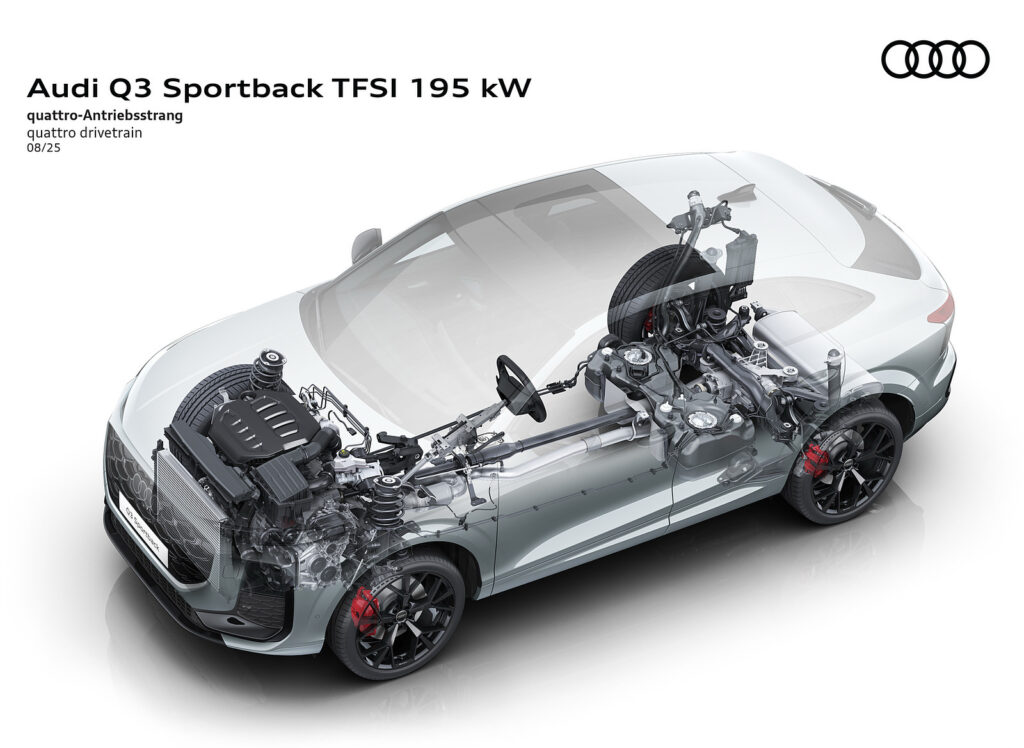
The plug-in hybrid is the headline. Its new 25.7-kWh gross battery (19.7 kWh usable) nearly doubles the previous PHEV’s capacity, unlocking up to 118 km (about 73 miles) of WLTP-rated electric range—one of the longest in the segment. DC fast-charging at up to 50 kW is also supported, bringing the pack from 10 to 80 percent in under 30 minutes. The battery uses 96 prismatic cells across four modules, each now rated at 73 Ah (up from 37 Ah).
Chassis hardware and drive modes
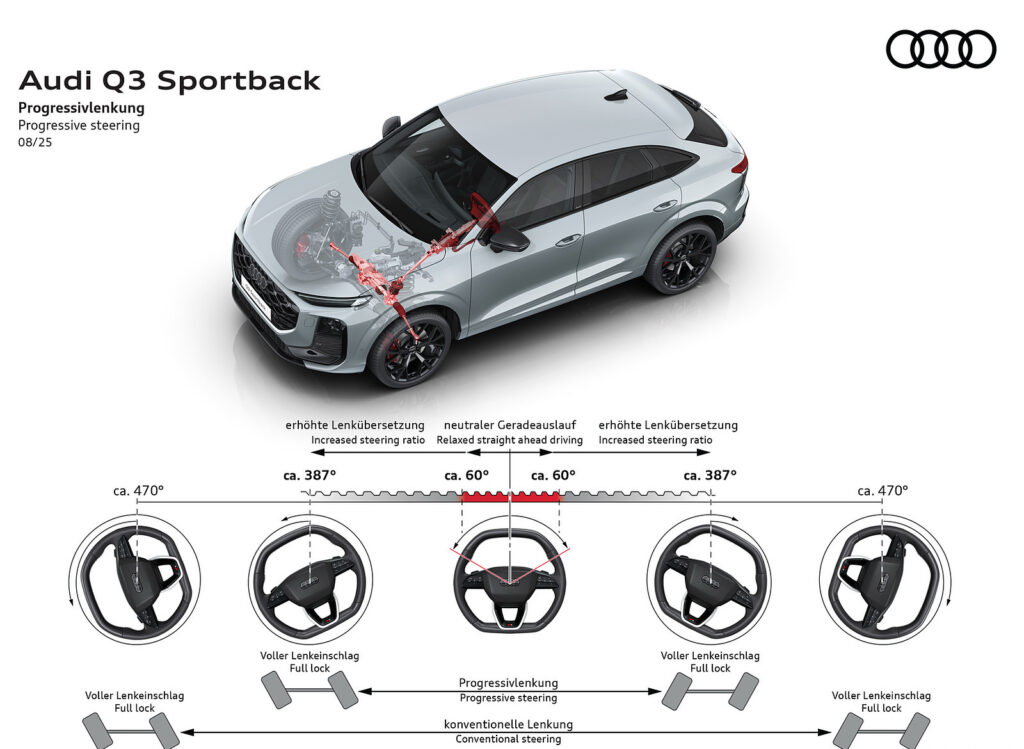
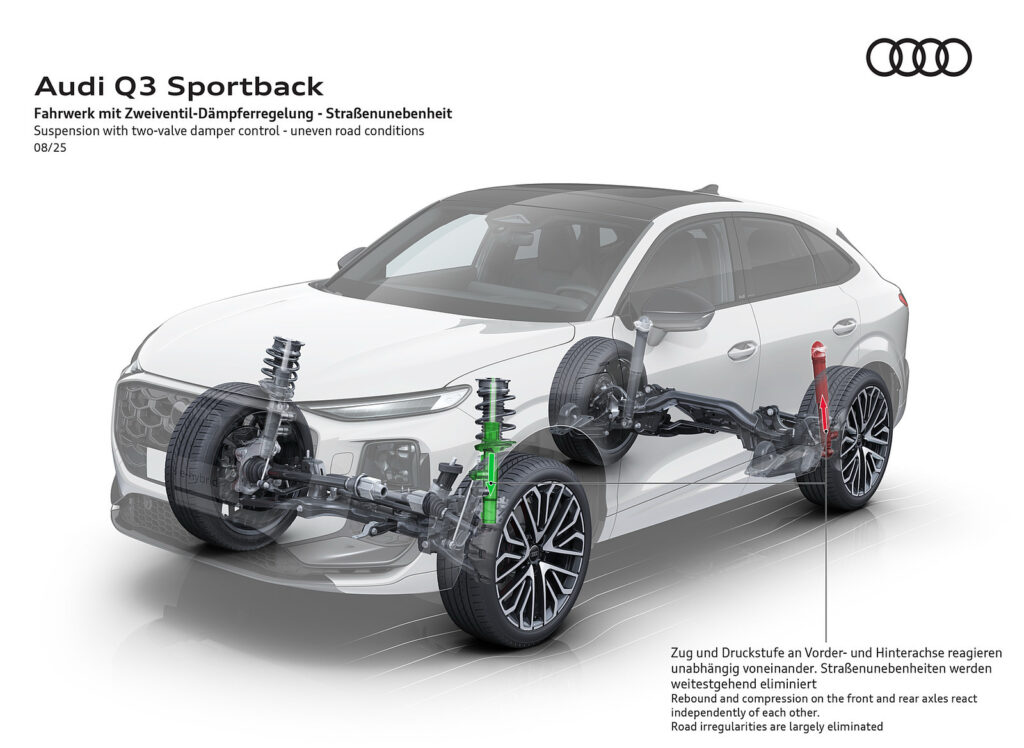
Buyers can choose from three suspension setups: the standard steel-spring arrangement, a firmer sport tune, or an adaptive system with two-valve dampers that separate rebound and compression control for a broader spread between comfort and handling. Steering also sees updates—progressive gearing is now more precise on-center, with quicker ratios near full lock, while reduced internal friction is designed to sharpen feedback.
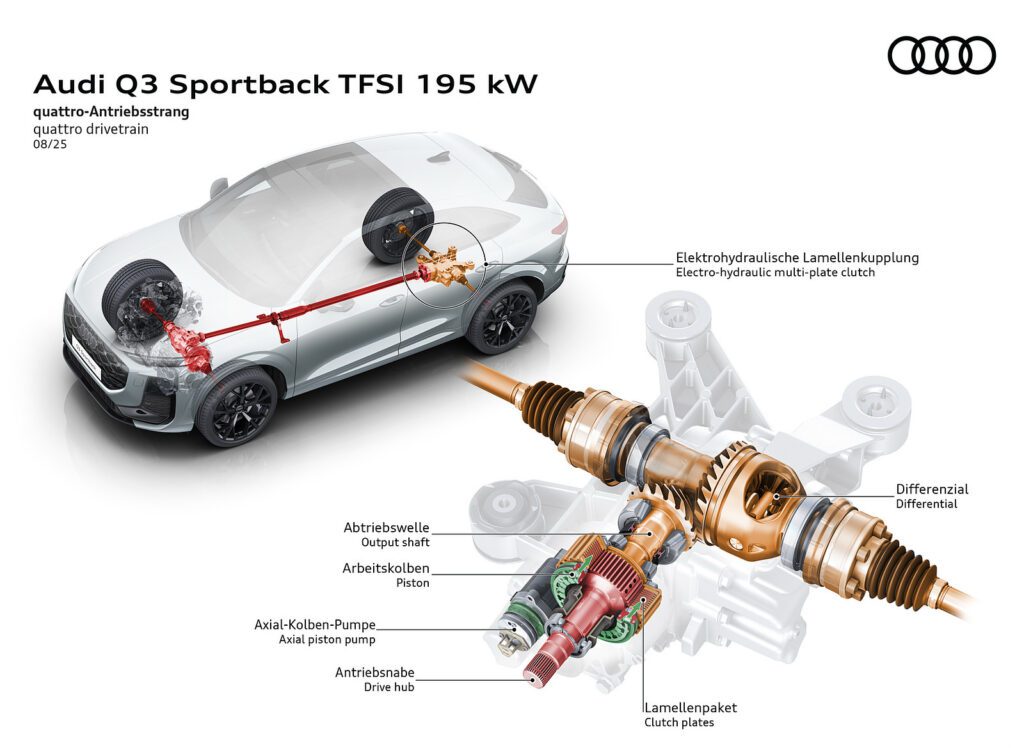
Audi’s Drive Select adds a new Balanced default mode alongside familiar profiles, while quattro models gain an Offroad plus setting. Drivers can even configure their preferred mode—whether comfort, dynamic, or off-road—as the car’s default at start-up.
Driver assistance and parking tricks
Standard safety and assistance features on the Q3 Sportback are generous from the outset. The list includes parking system plus with distance display, cruise control with speed limiter and prep for adaptive cruise, lane-departure warning with steering assist, front cross-traffic assist, and automatic emergency braking with turning and evasion support. Traffic-sign recognition and a fatigue/attention monitor (via an interior camera) also come standard.
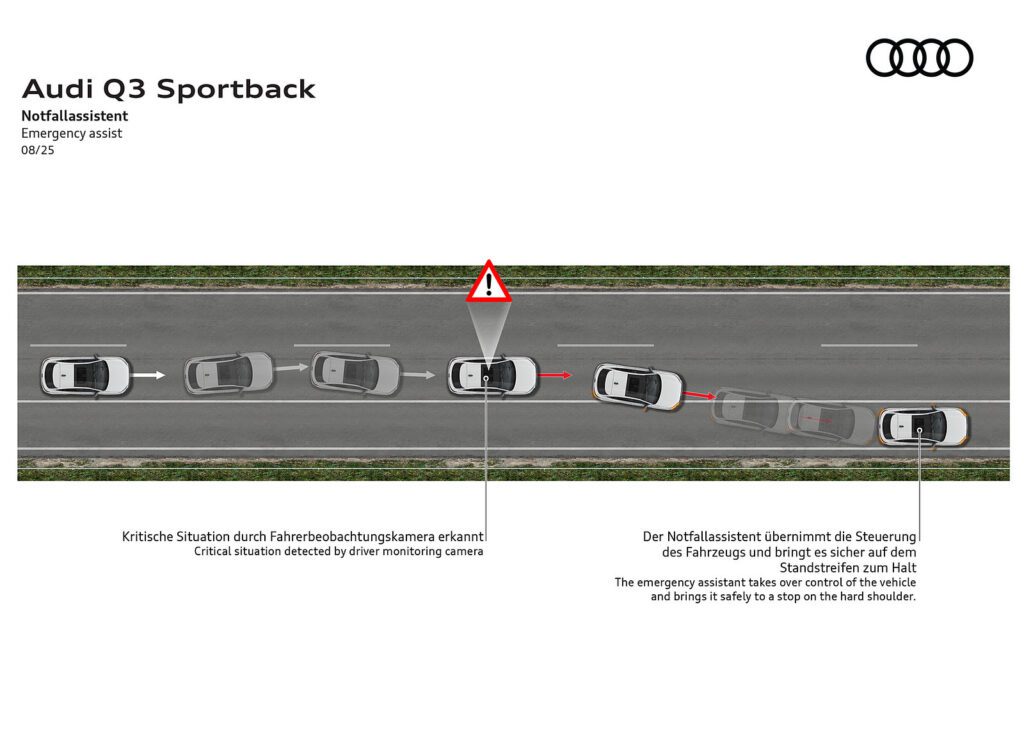
Step up to the optional adaptive driving assistant plus and you add lane centering with longitudinal control up to 130.5 mph, plus lane-change assist above 56 mph. Drawing on online map data, the system can even hold course when road markings fade. These connected features are included for three years, with subscription extensions available afterward. A more advanced emergency assist can automatically guide the car to the shoulder and bring it to a stop—hazards flashing—if the driver becomes unresponsive.
Parking tech also grows more capable. A trained parking function can memorize up to five maneuvers (about 164 feet each) for repeatable garage or carport entries, while a reverse assistant retraces the last 164 feet at speeds under 22 mph. A surround-view camera system offers multiple perspectives to protect wheels and bumpers. Traffic-sign recognition now covers right-of-way, construction zones, pedestrian and animal crossings, and even railroad crossings. Lighting features tie in as well: blind-spot alerts can be projected directly into the lane light, while an ice-warning symbol can appear ahead at highway speeds.
Practical pieces you don’t see
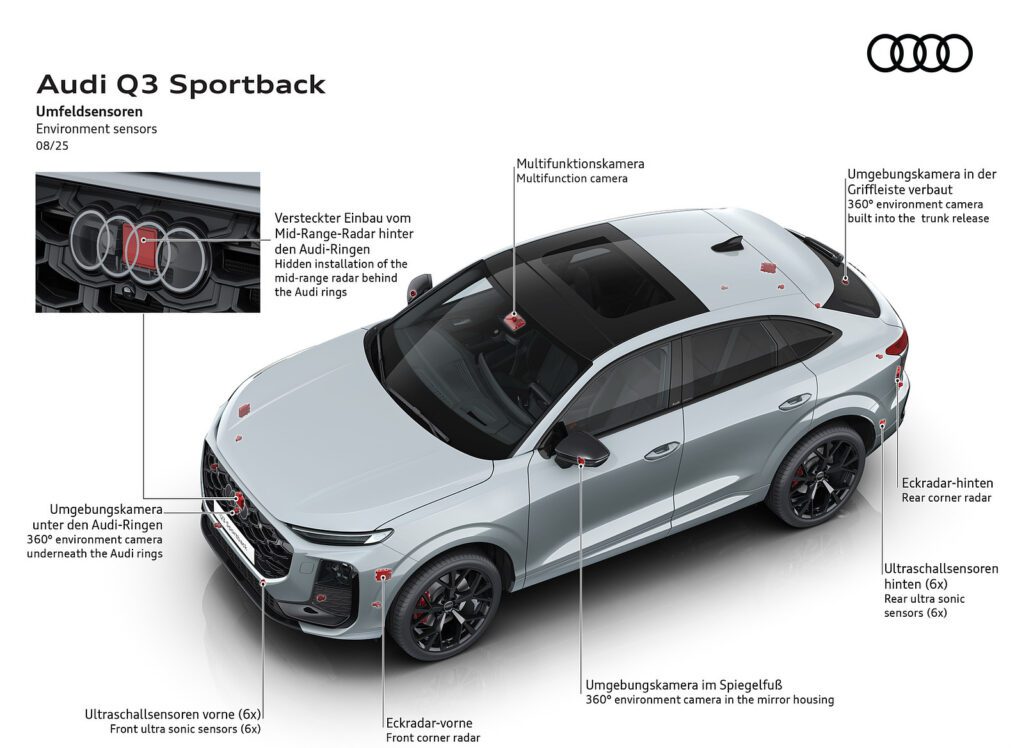
Some refinements are subtle but meaningful. Audi packages the front parking sensors and cooling flaps low in the fascia to smooth airflow, while key driver-assist sensors are tucked neatly behind the four rings. Cabin quietness improves with the available laminated side glass, and practicality remains intact: the trunk holds 17.2 cubic feet (expanding to 45.5 cu ft) with a sliding, reclining rear bench standard. For those with trailers or toys, the Q3 Sportback is rated to tow up to 4,630 pounds, with a nose weight of 198 pounds.
Manufacturing, timing, and price
Production of the 2026 Q3 family is split between Győr, Hungary, and Ingolstadt, Germany. Bodies are built in Győr, while additional painting and final assembly in Ingolstadt help balance demand. Europe gets the first deliveries this fall: in Germany, the Q3 Sportback with the 110-kW TFSI starts at €46,450, while the Sportback e-hybrid begins at €51,150. U.S. launch details and pricing will be announced later, with a likely streamlined engine lineup compared to Europe. For buyers leaning toward the more upright sibling, see our separate coverage of the 2026 Audi Q3 SUV.
The coupe‑roof Q3 that earns its silhouette
The 2026 Audi Q3 Sportback doesn’t lean on theatrics. Instead, it lowers the roof, sharpens the sheetmetal, and folds in tech that largely feels purposeful rather than flashy. The micro-LED headlights bring genuine utility, the plug-in hybrid finally delivers EV range and charging speed that matter, and the new stalk-mounted shifter frees up useful space in the cabin. Downsides? A whiff of subscription creep, plus slightly less cargo room than the standard Q3. Still, as a compact luxury crossover with sleeker lines but the same mechanical depth, the Sportback comes across as a thoughtful evolution—and a compelling alternative to its more upright sibling.