2026 Ferrari 849 Testarossa pushes Ferrari’s hybrid V8 flagship forward
Ferrari has redefined its mid-engine flagship with the 2026 Ferrari 849 Testarossa, a plug-in hybrid successor to the SF90 Stradale that resurrects one of Maranello’s most iconic names. The numbers immediately command attention: a combined 1,050 cv (around 1,035 hp) courtesy of a reengineered twin-turbo V8 paired with three electric motors. But sheer output isn’t the full story. Nearly every major system from the SF90 has been reworked or replaced—from the turbochargers and aerodynamics to the electronics suite and steering-wheel interface—all aimed at delivering quicker reactions and greater precision without increasing weight. It’s an ambitious target, and we’ll be watching closely to see how the claimed mass holds up once production cars hit the scales, fluids and options included.
Powertrain, performance and the numbers that matter
At the heart of the 2026 Ferrari 849 Testarossa lies the marque’s latest 3,990-cc flat-plane-crank V8, internally designated F154FC. This new evolution of Ferrari’s twin-turbo architecture produces 830 cv (≈818 hp) and 842 Nm (621 lb-ft) at 6,500 rpm, the result of an exhaustive engineering overhaul. Highlights include the largest turbochargers ever fitted to a Ferrari road car, featuring low-friction bearings, newly machined cylinder heads and block, a reshaped intercooler, Inconel exhaust manifolds with enlarged runners, titanium fasteners, upgraded fuel rails, and refined engine calibration to minimize turbo lag. The engine spins to 8,300 rpm and carries a 9.54:1 compression ratio, preserving the signature Ferrari urgency and sound despite hybrid assistance.
Augmenting that V8 is a three-motor hybrid system contributing 220 cv (≈217 hp) in total—one rear MGU-Kintegrated with the transmission and two front motors forming Ferrari’s RAC-e (Rotational Axis Control – electric) system for on-demand all-wheel drive and torque vectoring. A 7.45-kWh battery mounted low in the chassis supports up to 25 km (≈15.5 miles) of pure-electric range and delivers as much as 163 cv (≈161 hp) in eDrive mode. The hybrid behavior is managed via the eManettino, offering **four distinct settings—eDrive, Hybrid, Performance, and Qualify—**to tailor the balance between efficiency and outright aggression.
Ferrari’s performance claims are suitably extreme: 0–100 km/h (62 mph) in under 2.3 seconds, 0–200 km/h (124 mph) in 6.35 seconds, and a top speed exceeding 330 km/h (205+ mph). Expect 0–60 mph to dip slightly below the 2.3-second mark. Braking is equally formidable, with 100–0 km/h stopping in just 28.5 meters (93.5 ft) and 200–0 km/h in 108 meters (354 ft). Around Fiorano, Ferrari’s benchmark circuit, the 849 Testarossa clocks a 1:17.500 lap. Power delivery routes through an 8-speed dual-clutch gearbox, adapted from the SF90 XX, with recalibrated shift logic designed to deliver crisper, more dramatic upshifts that heighten driver engagement.
A chassis stacked with brainpower
The 849 Testarossa introduces Ferrari’s new ABS Evo, calibrated around the latest FIVE (Ferrari Integrated Vehicle Estimator) control architecture. FIVE continuously builds a real-time “digital twin” of the car, calculating factors like speed, yaw, and grip levels with exceptional accuracy. This data feeds directly into the systems governing traction control, torque vectoring, brake balance, and the electronic differential, allowing the car to brake later, harder, and more consistently—even when decelerating into a corner rather than in a straight line. The result is sharper predictability and improved control at the absolute limit.
Chassis updates extend beyond software. Revised suspension geometry and kinematics reduce roll gradient by 10%, while new road springs, now 35% lighter, contribute to better response and compliance. Ferrari claims a 3% gain in lateral performance compared with the SF90 Stradale. The braking system is also upgraded with 410 mm front rotorsand 372 mm rears, both benefiting from improved cooling and stiffer, thermally optimized rear calipers.
Regenerative braking has been retuned for a more natural pedal feel, seamlessly integrating electric regeneration with hydraulic braking for consistency and precision. Despite the additional hybrid hardware—expected to add over 20 kg—Ferrari says the dry weight remains at 1,570 kg (3,461 lb), maintaining a 45/55 front-rear balance. It’s a striking demonstration of Ferrari’s ability to add complexity without compromising agility.
Aero work that reads like race‑car homework
Downforce for the 2026 Ferrari 849 Testarossa rises to 415 kg at 250 km/h (about 915 lb at 155 mph)—a 25-kg improvement over the SF90 Stradale—thanks to a comprehensive rethink of the car’s aerodynamic package. Much of the added grip comes from an entirely reworked underfloor, which now employs cascading vortex generators to accelerate airflow and enhance stability. Up front, a larger splitter with small vertical flicks, combined with a squarer front bumper, channels air more efficiently to the radiators and brakes while minimizing turbulent wake from the tires.
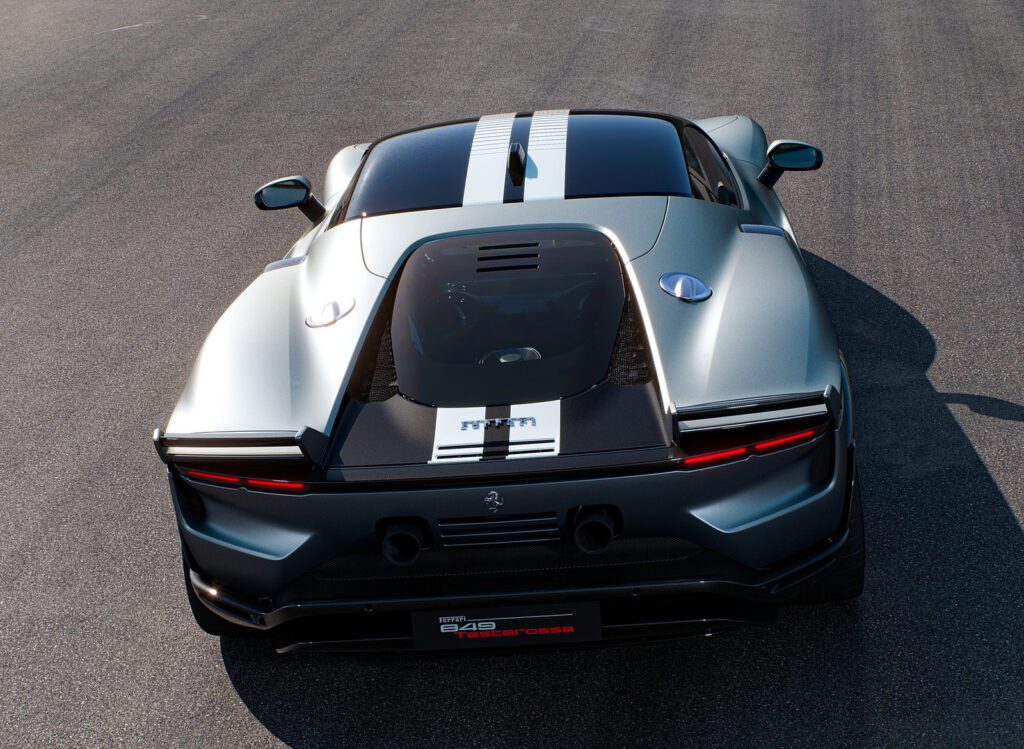
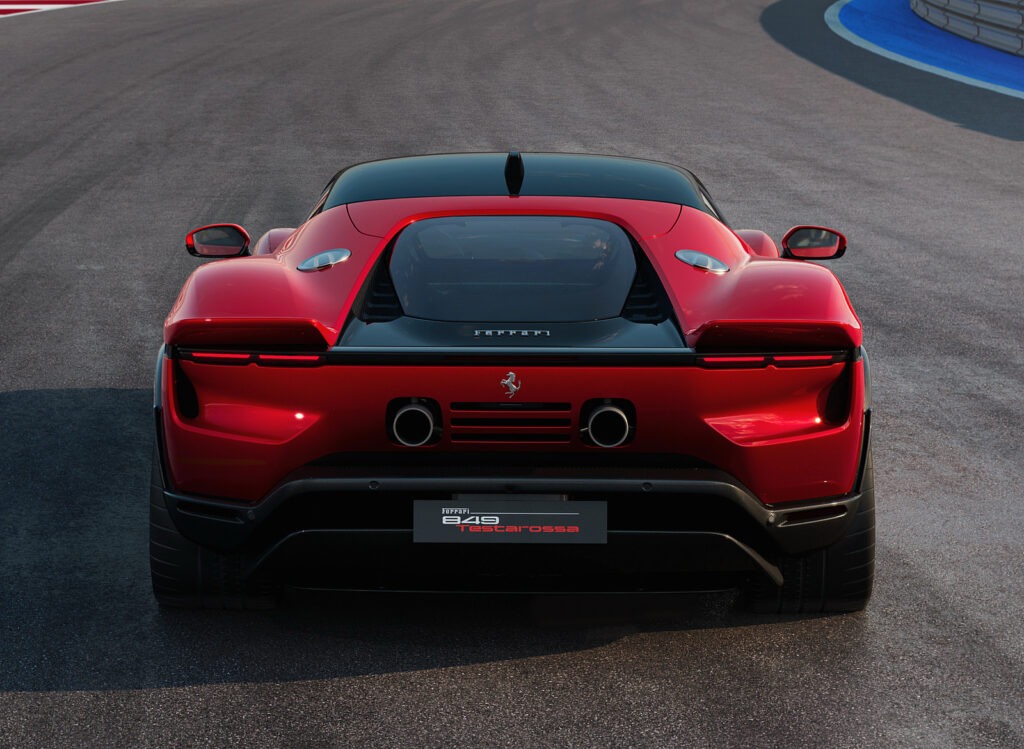
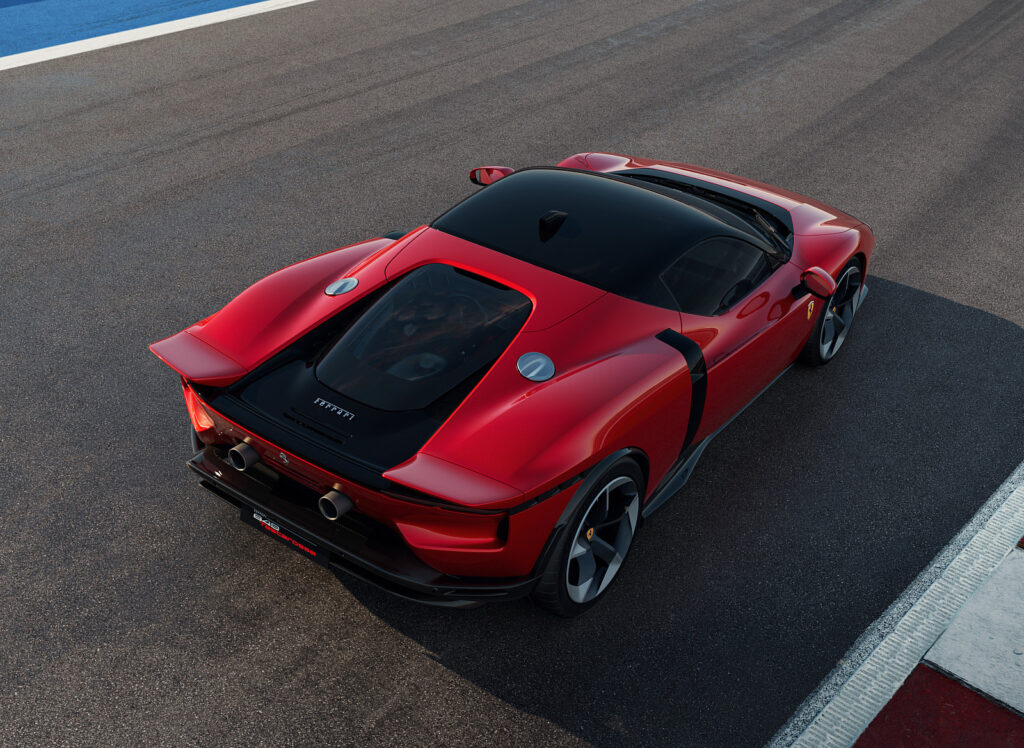
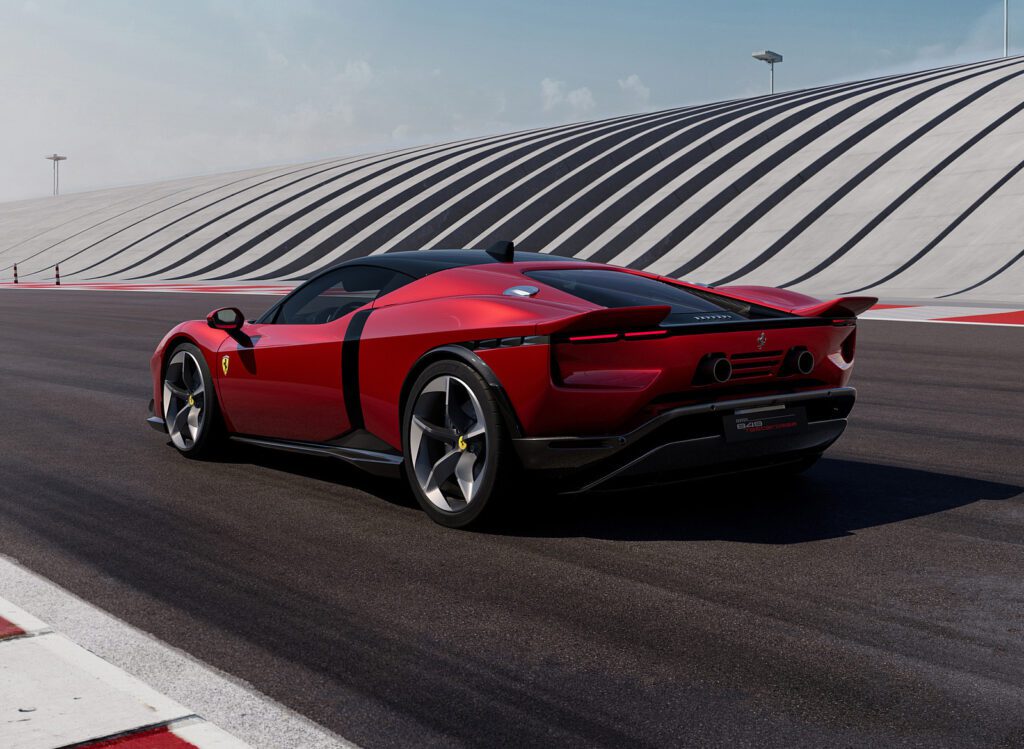
At the rear, the 849 adopts a twin-tail design inspired by Ferrari’s endurance race prototypes. It integrates with an active rear spoiler capable of switching between low-drag and high-downforce modes in under one second, and it’s also 2 kg lighter than the SF90’s equivalent mechanism. The rear diffuser features a new multi-level profile with vertical fences that isolate wheel wake and reduce drag by 10% compared to the SF90’s rear underfloor, balancing aerodynamic load and efficiency.
To cope with the V8’s added output—50 cv more than before—Ferrari has increased cooling capacity by 15%. Radiators feature expanded surface area, while the side intercoolers grow 19% larger and are set at a shallower angle for improved airflow. Revised ducting along the doors and flanks now feeds more air to the intercoolers, intakes, and rear brakes, with measurable benefits: roughly 15% more cooling flow to the front brakes and an impressive 70% gain at the reengineered rear calipers. The result is a car that not only grips harder but also keeps its performance components operating in their ideal thermal window, lap after lap.
Design that nods to the past, but refuses to cosplay
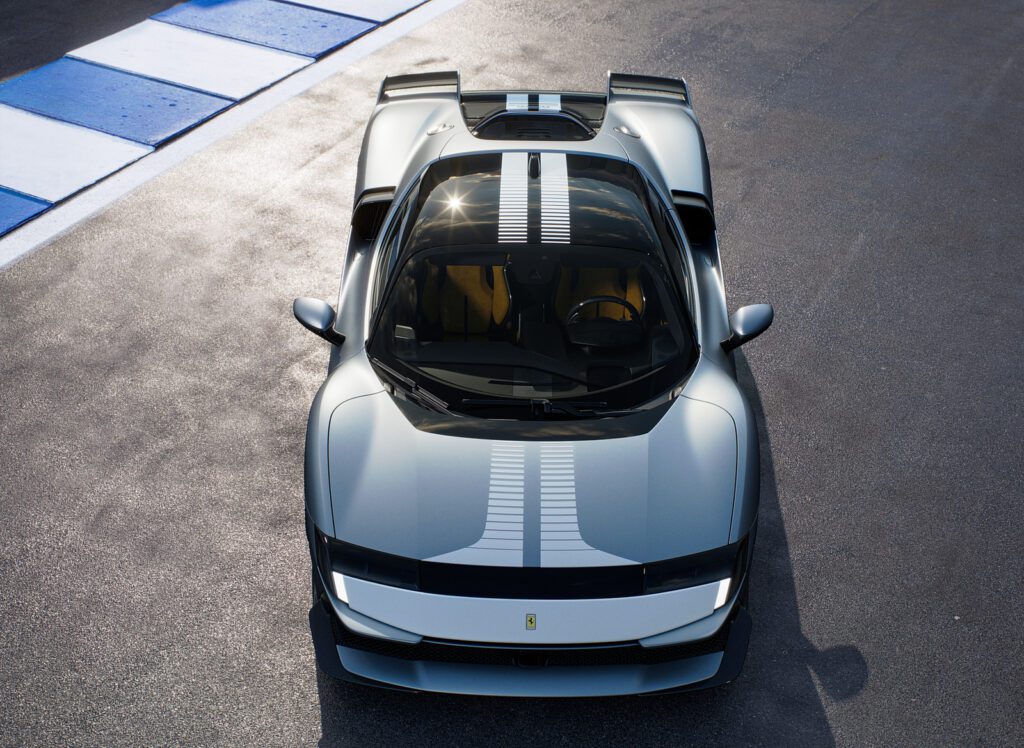
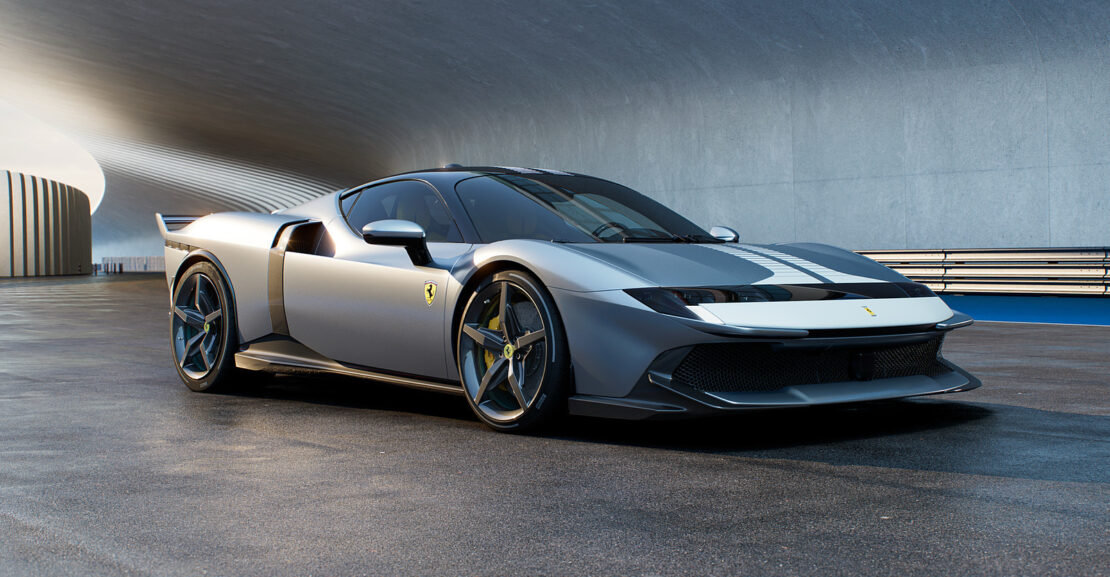
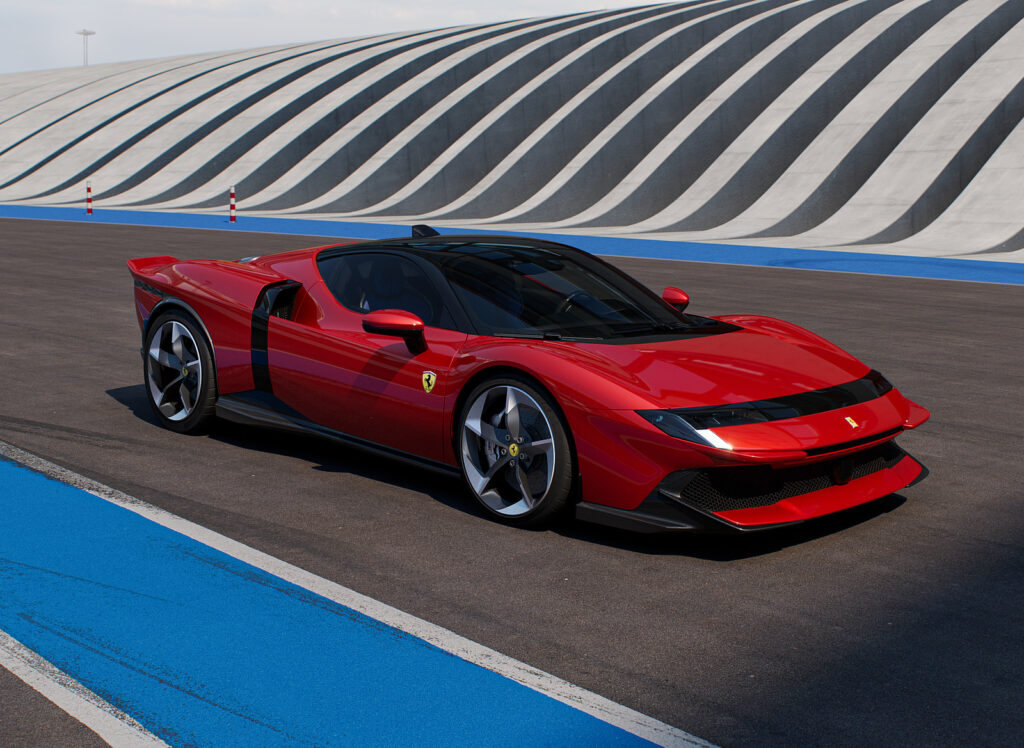
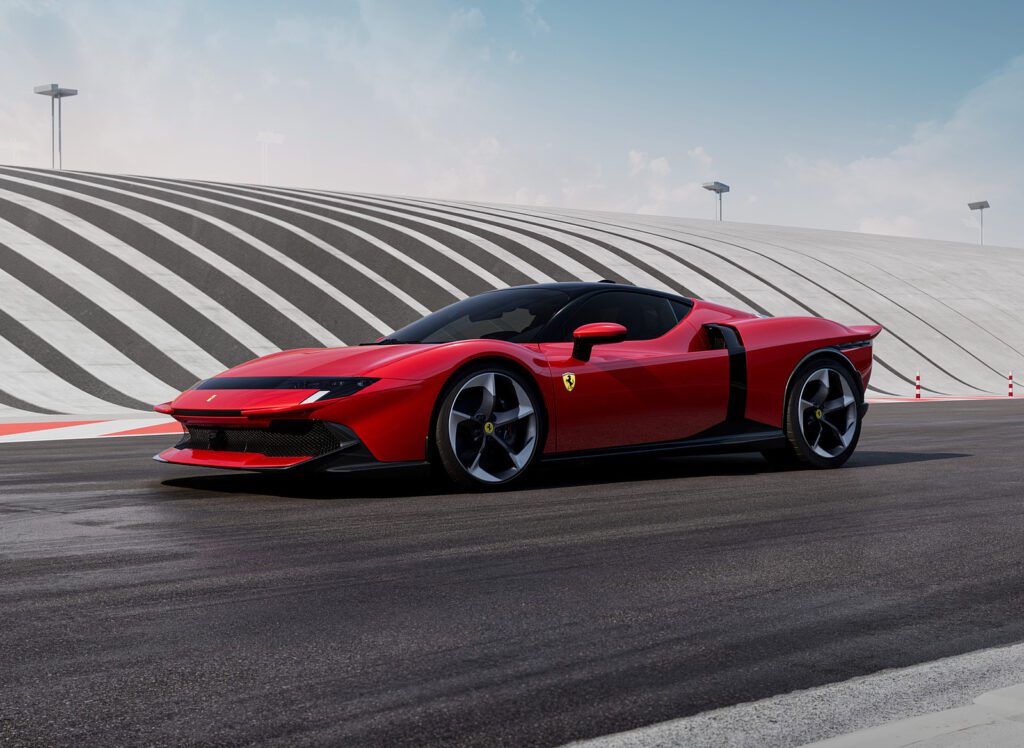
The 2026 Ferrari 849 Testarossa doesn’t try to replicate the iconic ’80s wedge that made its predecessor famous. Instead, it embraces a modern, architectural design language, defined by crisp edges, tensioned surfaces, and a cab-forward stance that communicates agility and purpose. The door panels are more than sculptural—they serve as active aerodynamic elements, incorporating contrasting vertical intakes that channel air directly to the intercoolers and rear brakes for enhanced cooling and efficiency.
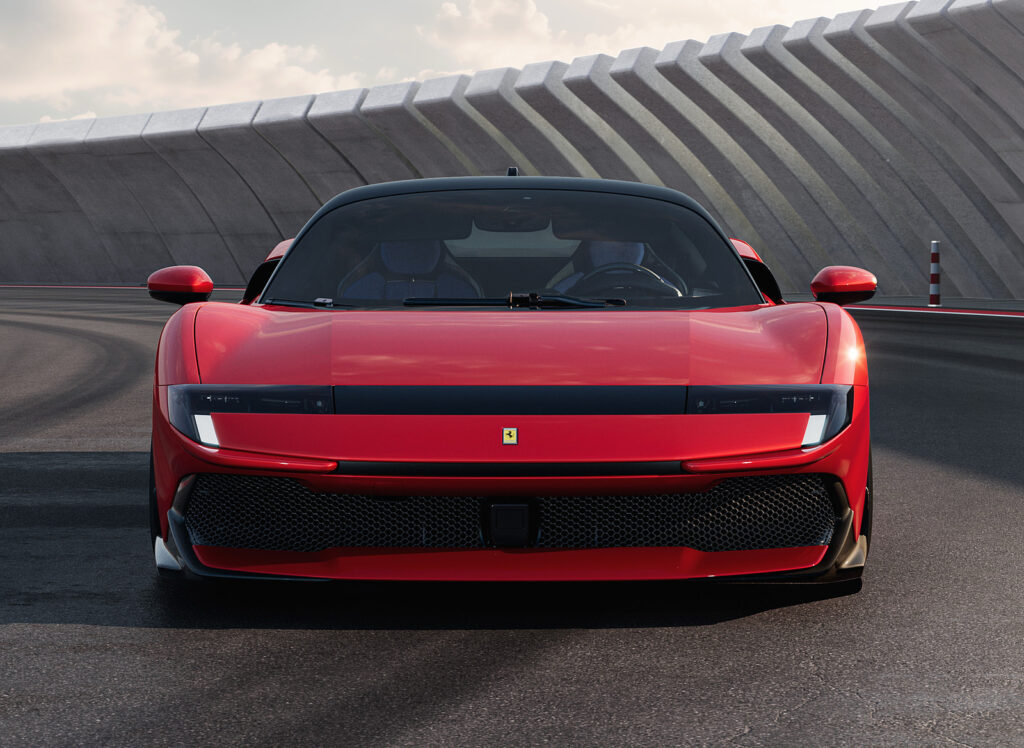
Up front, a horizontal lighting band spans the nose between the headlamps—a contemporary cue shared with the 12Cilindri and the upcoming F80—giving the car a unified, technical look. At the rear, twin-wing elements hover above a deep, multi-channel diffuser, framing signature round exhaust outlets that nod to tradition while serving aerodynamic function.
The forged alloy wheels continue the airflow obsession, incorporating aerodynamic profiles that help evacuate air from the wheel wells to reduce drag and turbulence. Multiple finishes are available, allowing owners to tailor the car’s visual character while preserving its aerodynamic efficiency. The result is a design that feels unmistakably Ferrari—leaner, more intelligent, and every bit as dramatic as its name deserves.
Cabin, controls and HMI
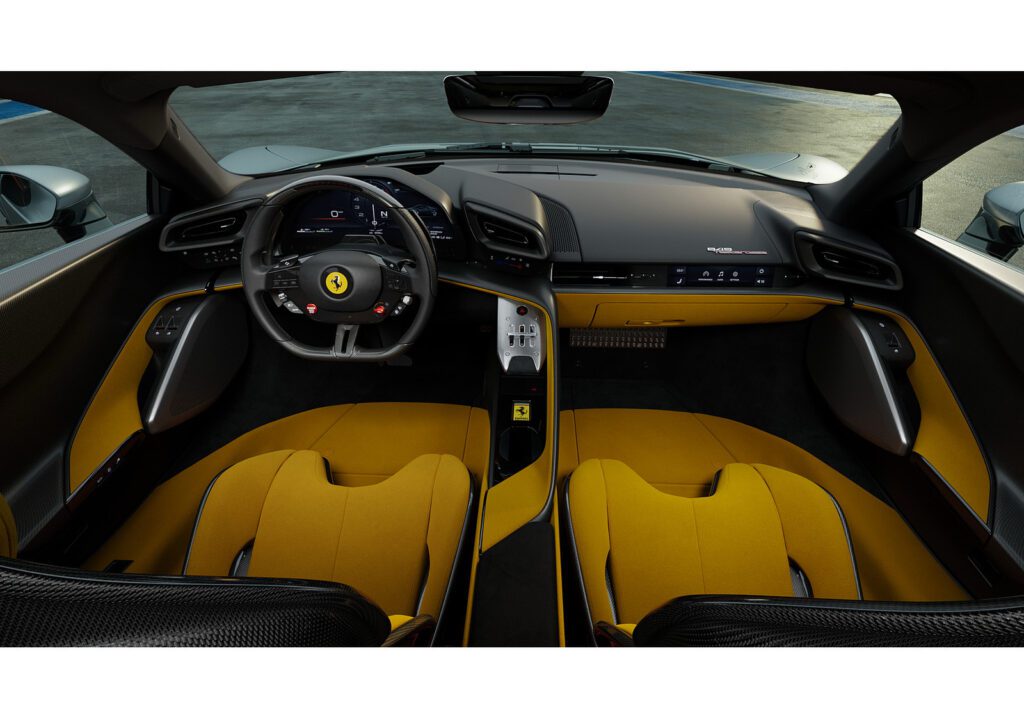
Inside, the 2026 Ferrari 849 Testarossa adopts a “sail” design theme that reshapes the center tunnel and door panelsinto flowing, sculptural forms that both divide and connect the cockpit. In a nod to Ferrari tradition, metal switchgearreturns to the steering wheel, including a physical engine start button, restoring tactile engagement amid the otherwise digital environment. Ahead of the driver sits a full-width digital display, complemented by a passenger-side screen, giving both occupants access to performance and infotainment data.
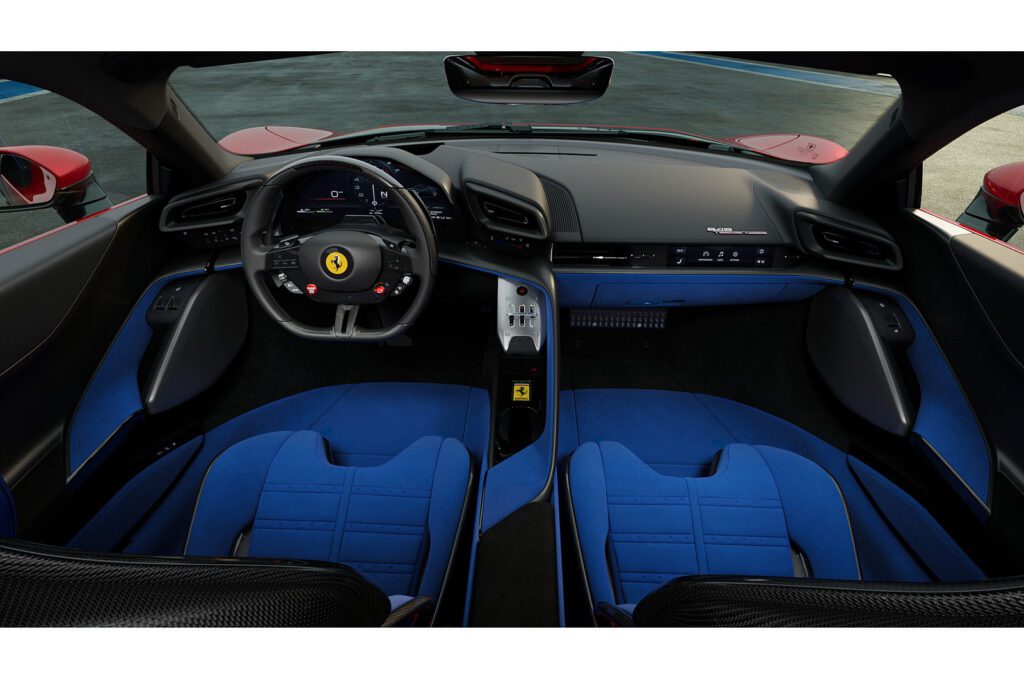
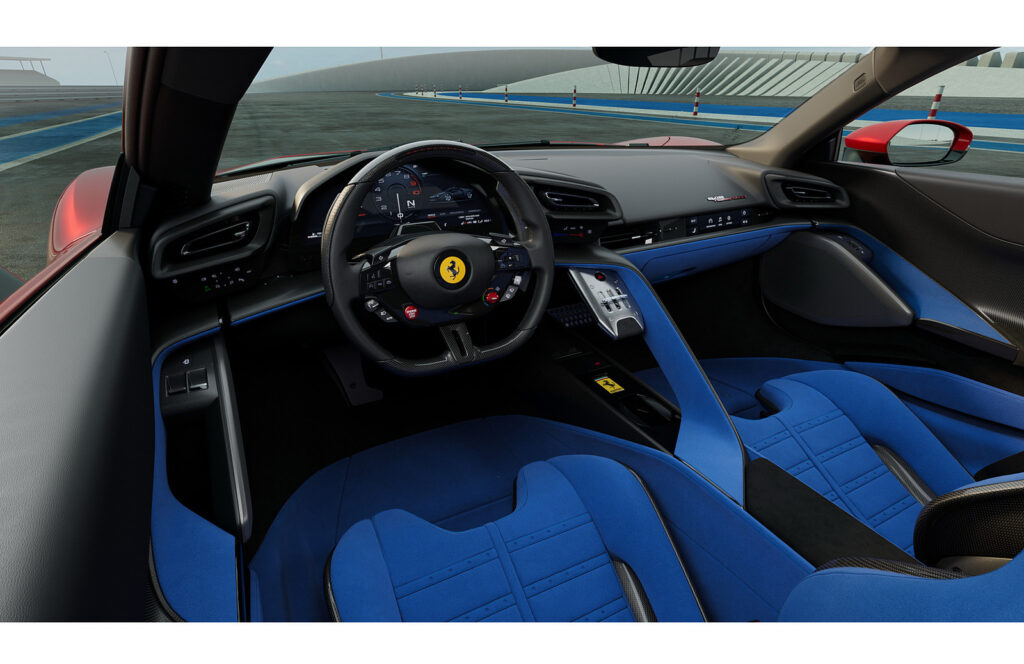
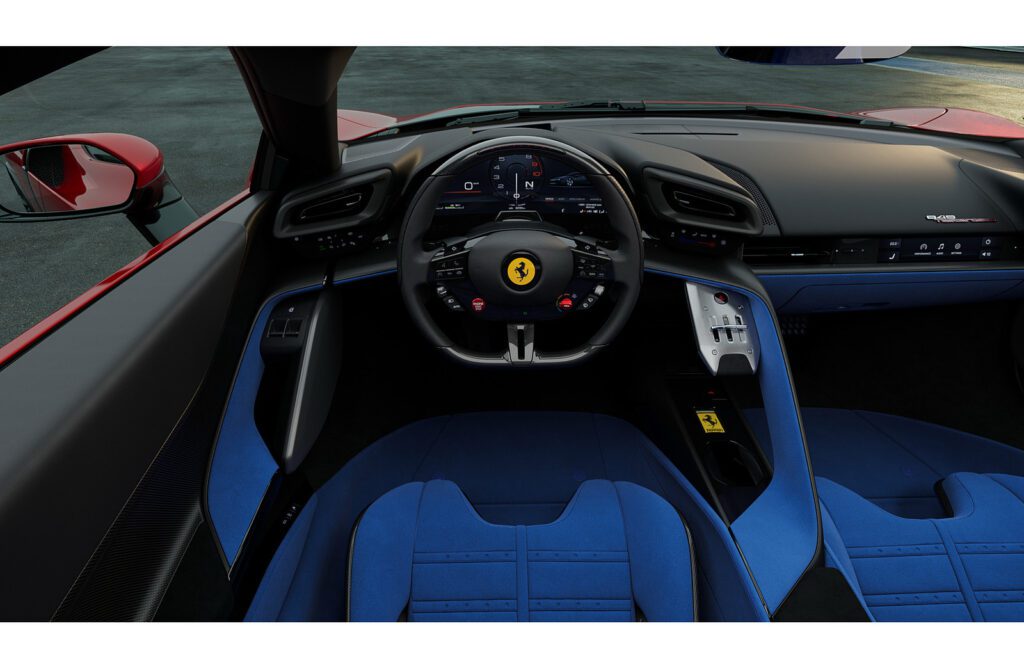
The gated-style gear selector—a contemporary reinterpretation of Ferrari’s classic open-gate shifter—sits proudly within the central sail, underscoring the brand’s blend of heritage and modern minimalism. Apple CarPlay and Android Autocome standard, along with wireless charging integrated into the tunnel, while the MyFerrari Connect app allows remote monitoring of vehicle status and charging.
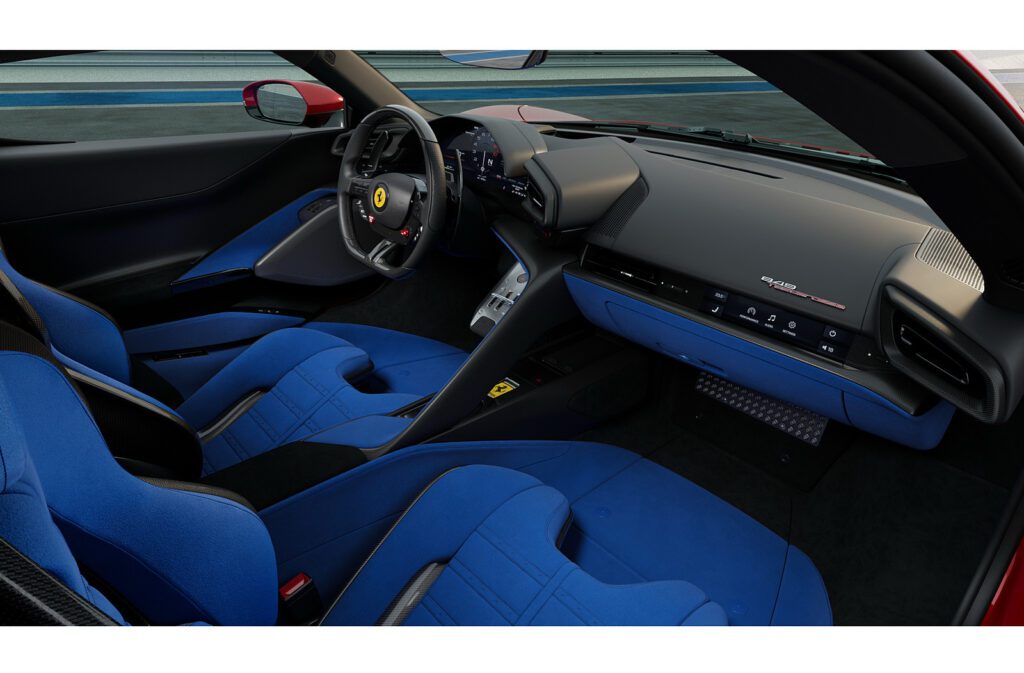
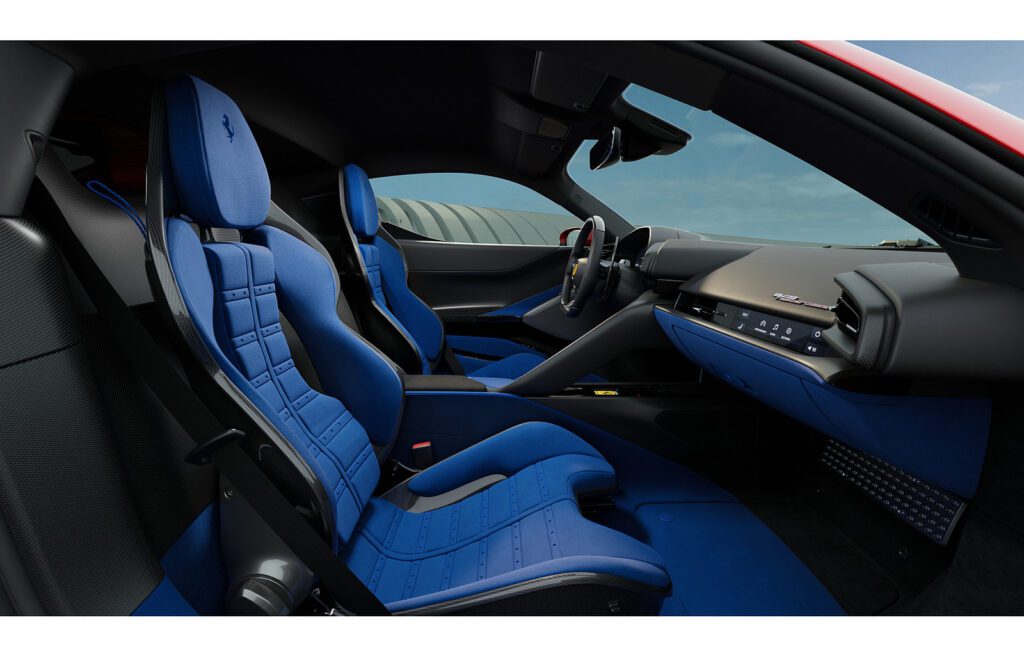
Seating options range from comfort-oriented chairs to carbon-shell sport seats that offer more aggressive bolstering and lower weight. Ergonomics have been subtly refined, with thinner lower door panels freeing up a bit more leg and knee room. True to form, practicality stays secondary to performance: the front trunk measures just 74 liters (about 2.6 cubic feet)—a reminder that this is a machine built first and foremost for driving theater, not luggage capacity.
Tyres, sizes and the fine print
Tire fitment for the 2026 Ferrari 849 Testarossa comes via a multi-supplier approach, underscoring Ferrari’s focus on versatility and performance tuning. Standard rubber includes the Pirelli P Zero R, while certain specifications substitute Bridgestone Potenza Sport tires, available with a run-flat option. For maximum grip, the Michelin Pilot Sport Cup 2 R is offered as an upgrade, and the Cup 2 is fitted as part of the Assetto Fiorano track-focused package.
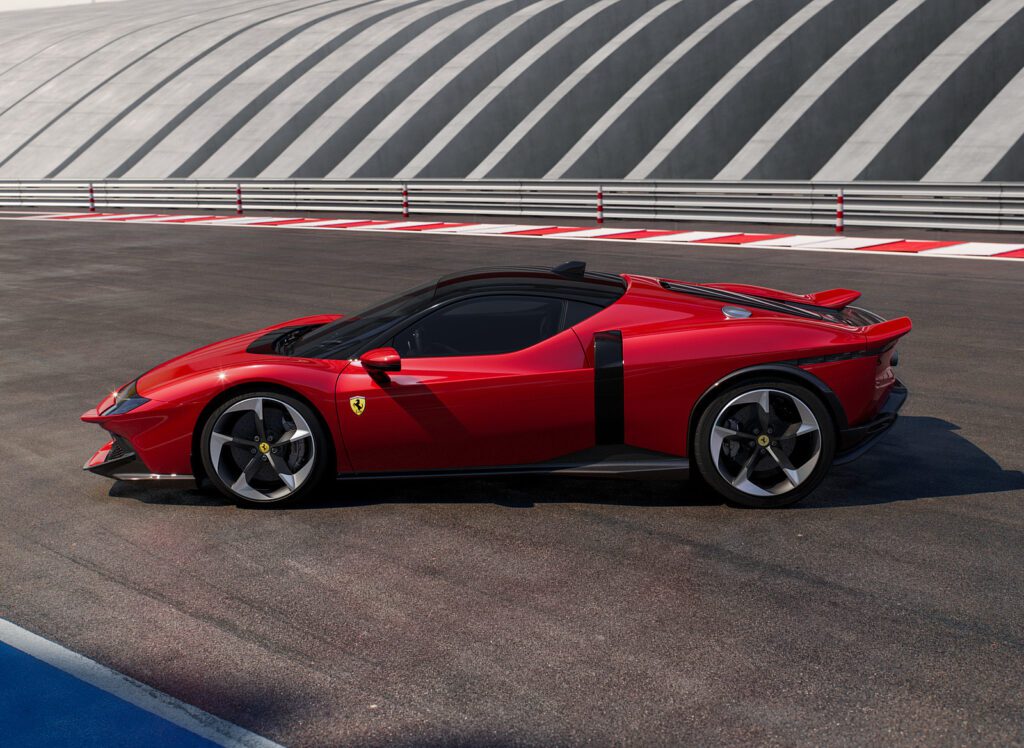
Wheel and tire sizes remain aggressive: 265/35R20 fronts on 9.5-inch rims and 325/30R20 rears on 11.5-inch rims, ensuring a broad contact patch for both traction and stability.
Dimensionally, the 849 Testarossa measures 185.8 inches (4,720 mm) in length, 78.7 inches (2,000 mm) in width, and 48.2 inches (1,225 mm) in height, riding on a 104.3-inch (2,650 mm) wheelbase. The fuel tank holds 18.0 gallons (68 liters)—a reminder that while it’s a hybrid, this Ferrari still drinks like a supercar built for serious miles and serious speed.
Soundtrack and shift theatrics
Ferrari has re-sculpted the acoustic character of its twin-turbo V8 for the 849 Testarossa, aiming for richer tone and sharper emotional feedback across the rev range. The revised harmonics bring a deeper resonance at low and mid rpm, while the upper registers shine with a brighter, more metallic edge as the needle swings toward redline. The flat-plane crankshaft preserves that signature Ferrari bark—raw, immediate, and mechanical.
Meanwhile, updated shift logic amplifies the theatrics: overrun pops and aggressive upshift flares become more pronounced when the Manettino is set to the car’s performance-focused modes. The result isn’t restrained or filtered. It’s unapologetically visceral—exactly as a Ferrari should be.
Advanced driver assists
As expected for Ferrari’s new flagship, the 849 Testarossa arrives fully equipped with a comprehensive ADAS suite, though calibrated for minimal intrusion—true to the brand’s driver-first ethos. The system includes Adaptive Cruise Control with Stop & Go, Automatic Emergency Braking with pedestrian and cyclist detection, Blind-Spot Detection, Lane Departure Warning and Lane Keeping Assist, Automatic High Beams, Traffic Sign Recognition, Surround-View Monitoring, Rear Cross-Traffic Alert, and driver-fatigue detection.
Ferrari’s engineers have tuned these aids to intervene subtly and predictably, preserving steering feel and throttle response even when active—so assistance never overshadows the car’s core dynamic character.
Assetto Fiorano package for track addicts
Ferrari retains the Assetto Fiorano package for the 849 Testarossa—a track-focused specification that sharpens the car’s already formidable dynamics. The setup sheds around 30 kg (66 lb) through extensive use of carbon fiber and titanium, including lightweight tubular seats that alone cut about 18 kg. Customers can also spec 20-inch carbon-fiber wheels to further reduce unsprung mass.
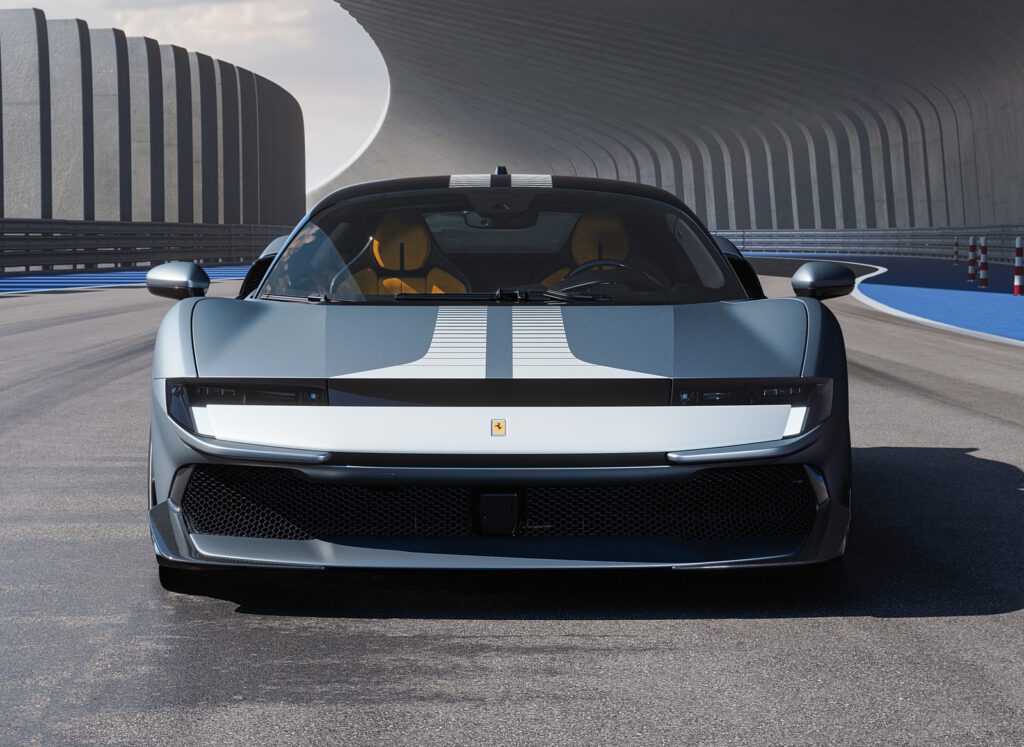
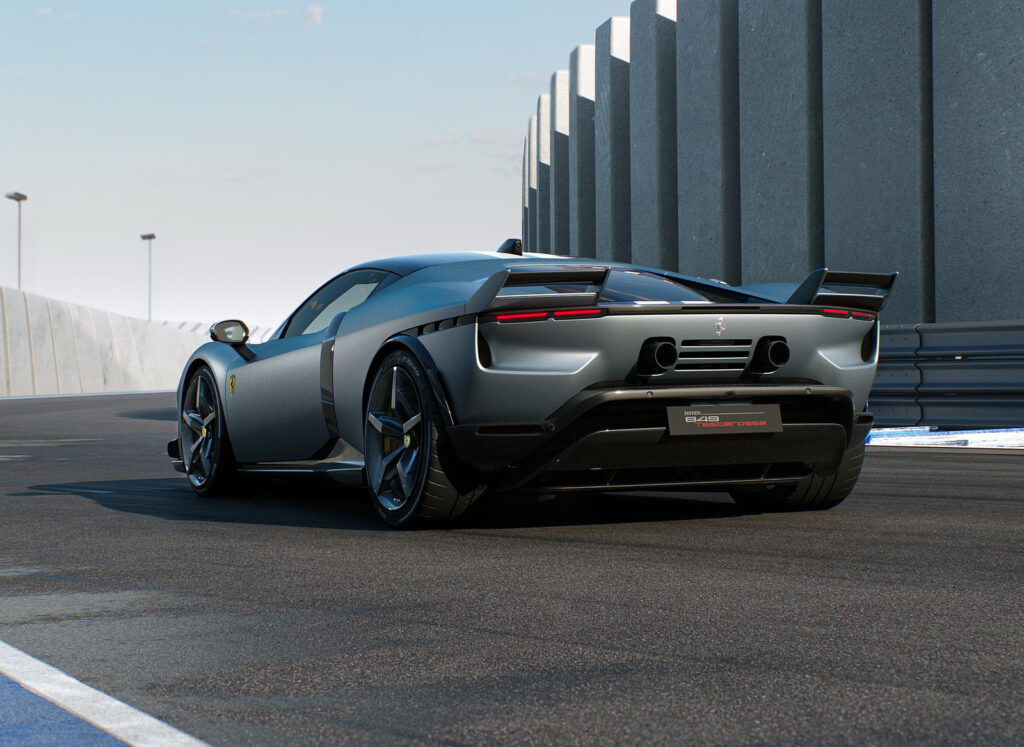
Suspension hardware steps up with fixed-rate Multimatic dampers, lighter coil springs, and a 10 percent stiffer roll gradient, all aimed at flatter cornering and faster transient response. Aero revisions are equally serious: enlarged front flicks, an underfloor loaded with extra vortex generators, and twin rear wings that replace the standard twin-tail layout. The result is nearly triple the rear downforce versus the base car—without a major drag penalty.
Grip comes from Michelin Pilot Sport Cup 2 tires developed specifically for this configuration. Notably, for the first time Ferrari allows Assetto Fiorano buyers to option a front-axle lifter, provided they retain the MagneRide dampersinstead of the fixed Multimatics. Two exclusive gradient-stripe liveries—Bianco Cervino or Rosso Corsa—complete the package, signaling intent before the engine ever starts.
Sustainability and service programs
Ferrari builds sustainability directly into the 849 Testarossa’s core hardware. The engine castings—cylinder heads, block, and sump—are made from recycled secondary aluminum alloys, a move that cuts CO₂ emissions tied to aluminum production by up to 80%.
Ownership support is equally forward-looking. The hybrid system comes with a five-year warranty, while Ferrari’s standard seven-year scheduled maintenance program covers all routine service. Beyond that, two paid warranty extensions are available:
Warranty Extension Hybrid – Extends full-vehicle coverage to eight years and includes a complimentary high-voltage battery replacement at that mark.
Power Hybrid – Expands powertrain protection from year eight to year sixteen, again including a free HV battery replacement at year sixteen.
Together, these measures underscore Ferrari’s effort to make hybrid performance ownership as durable and low-stress as it is electrifying.
Spider note
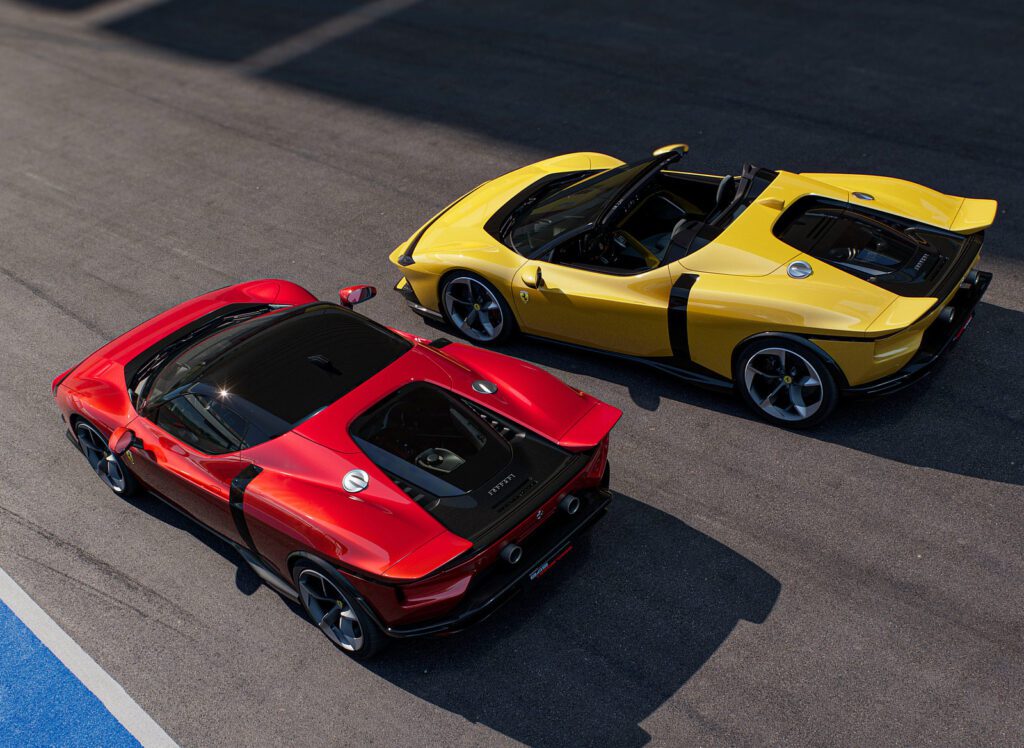
Ferrari rounds out the lineup with the 849 Testarossa Spider, detailed separately but mechanically identical to the coupe. It retains the 1,050 cv (≈1,035 hp) plug-in hybrid system and all-wheel-drive layout, but the retractable-roof structure raises dry weight to 1,660 kg (3,660 lb).
Performance remains extreme: 0–200 km/h in 6.5 seconds, a Fiorano lap of 1:18.100, and a top speed still north of 205 mph. The Spider sits slightly lower overall due to packaging changes, but its key distinction is visceral—the open-air access to that retuned flat-plane V8 soundtrack. If the coupe is the technical showcase, the Spider is the emotional one.
Pricing, availability and a bit of perspective
U.S. pricing for the 2026 Ferrari 849 Testarossa remains under wraps, but expect it to eclipse the outgoing SF90 Stradale’s sticker given its performance, craftsmanship, and expanded hybrid tech. The 15.5-mile EV-only range is best viewed as a tool for silent early-morning getaways rather than daily commuting, and Ferrari’s “no added weight” claim will ultimately hinge on real-world specs and options. Still, with so much reengineered—from the V8 internals and aero surfaces to control logic, cooling systems, and cabin ergonomics—this isn’t an incremental refresh. It’s a comprehensive rework of Ferrari’s hybrid flagship.
Why this flagship matters
The 2026 Ferrari 849 Testarossa redefines Maranello’s hybrid V8 formula with depth and intent—delivering 1,035-hp-class performance, a far more advanced control and braking architecture, and aerodynamics that prioritize function over theater. It salutes Ferrari heritage without leaning on nostalgia, succeeding the SF90 with real mechanical and dynamic progress rather than headline figures alone. For those drawn to open-air drama, the 849 Testarossa Spidercarries nearly all the same engineering with only subtle compromises. In either form, Ferrari’s mid-engine flagship now blends electric restraint and unfiltered combustion fury with unmatched precision.