
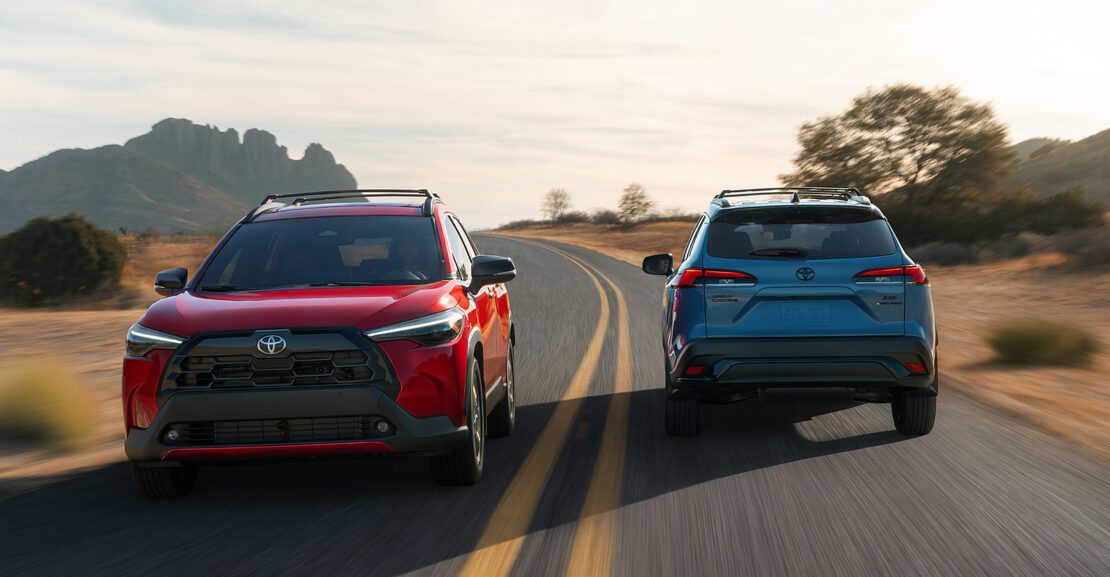
2026 Toyota Corolla Cross comes into sharper focus with fresh styling and more tech
Toyota’s smallest crossover has been a reliable volume player since debuting in U.S. showrooms in 2022, and for 2026 it gets a mid-cycle refresh aimed at keeping it competitive in the packed subcompact SUV segment. Assembled in Huntsville, Alabama—a move that softens the impact of import tariffs—the updated Corolla Cross will reach dealers later this year in both gasoline and hybrid versions. The revisions bring a more distinctive front fascia, new paint options, an upgraded infotainment system, and a handful of mechanical refinements. Here’s what’s new.
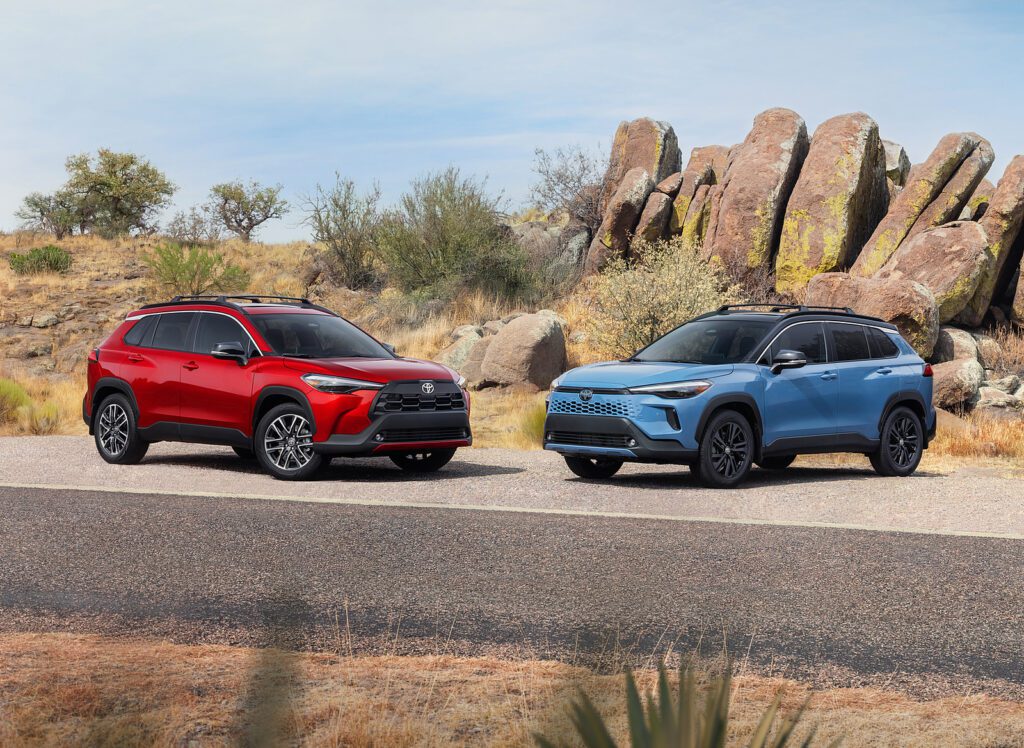
Two distinct faces, plus a new shade of blue
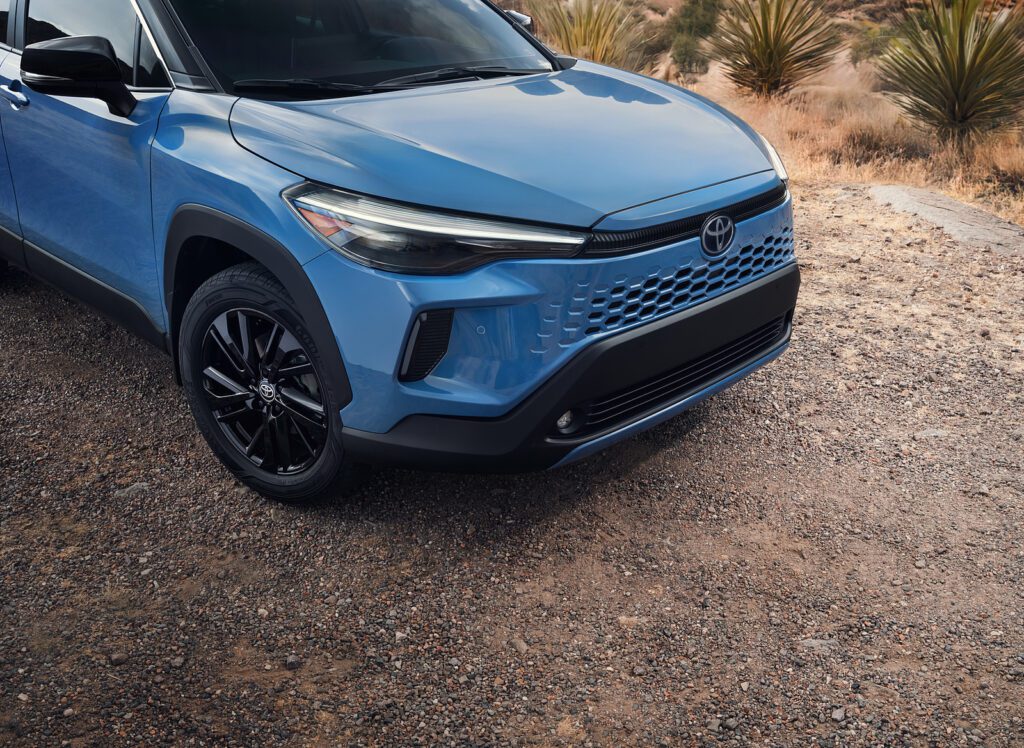
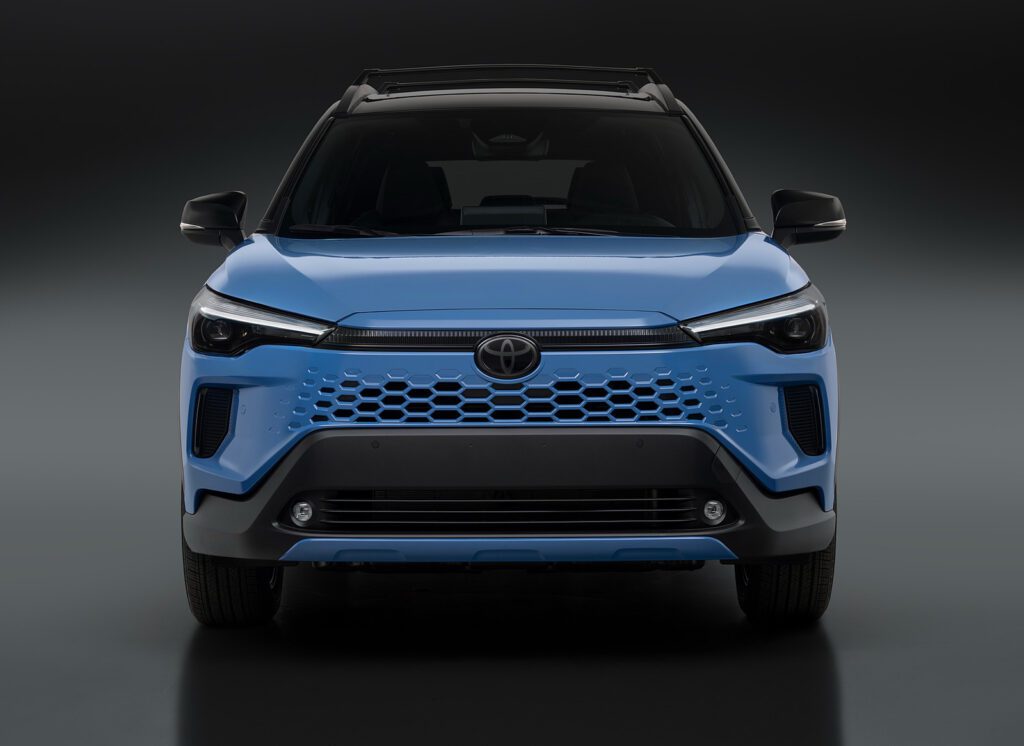
For 2026, Toyota finally separates the gas and hybrid Corolla Cross with distinct front-end designs. Gas models now wear a wide trapezoidal grille with thick horizontal bars, giving the face a tougher, more assertive presence. Hybrids, meanwhile, trade chrome for a cleaner body-color insert punctuated by hexagonal openings, a fresher and more modern look.
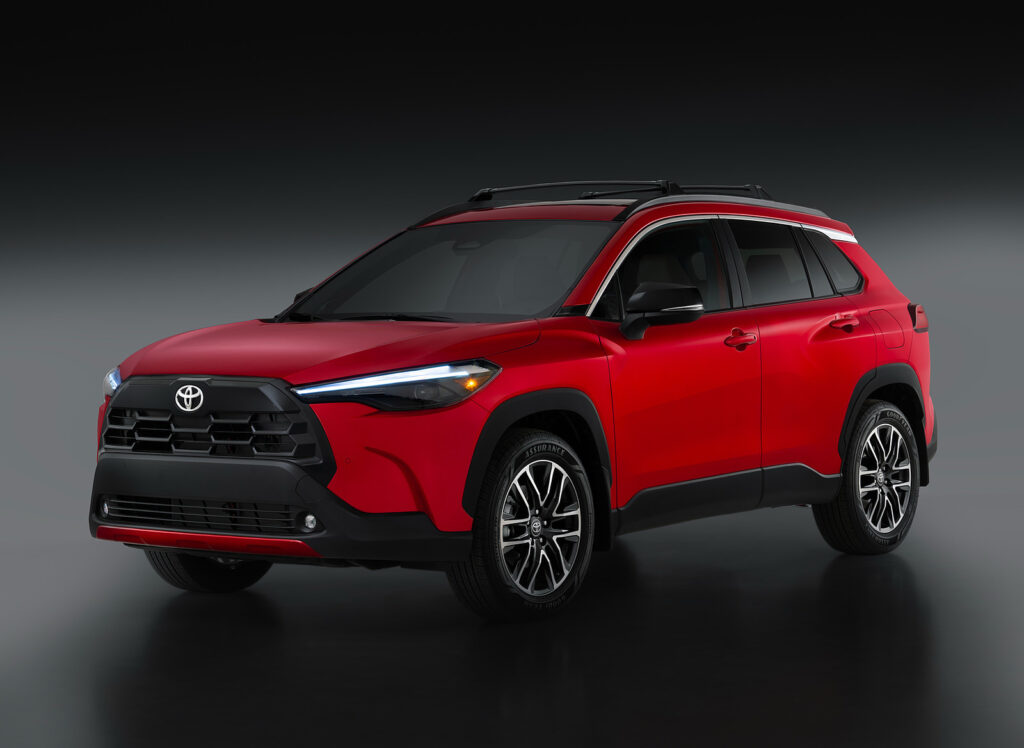
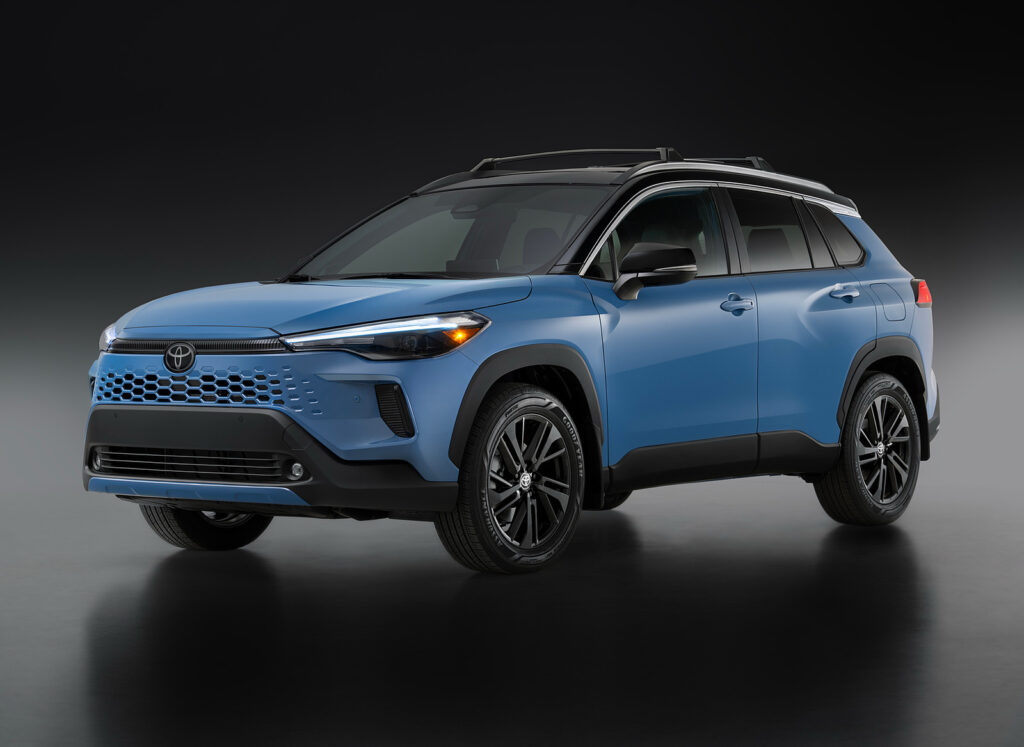
The color palette also expands, with the once-optional Cavalry Blue becoming a regular offering. On SE and XSE hybrids, it can even be paired with a contrasting Jet Black roof for extra style. Wheel choices have been shuffled too: XLE trims ride on new 18-inch alloys finished in dark gray with machined accents, while the sporty XSE hybrid gets gloss-black 18s.
The overall effect adds some much-needed personality to Toyota’s entry crossover, though those craving bolder style statements may still find themselves drawn to the slightly larger Toyota RAV4.
Cabin tweaks center on screens and storage
Inside, Toyota has reworked the cabin with practical touches and upgraded tech. The center console is reshaped to free up more usable space, while the drive-mode buttons have been repositioned for easier access. XLE and XSE trims now come standard with a 10.5-inch touchscreen running Toyota’s latest Audio Multimedia system, while lower L, LE, S, and SE grades retain the 8-inch display but can upgrade to the larger unit. A 7-inch multi-information screen is standard, with a 12.3-inch digital cluster available on higher trims.
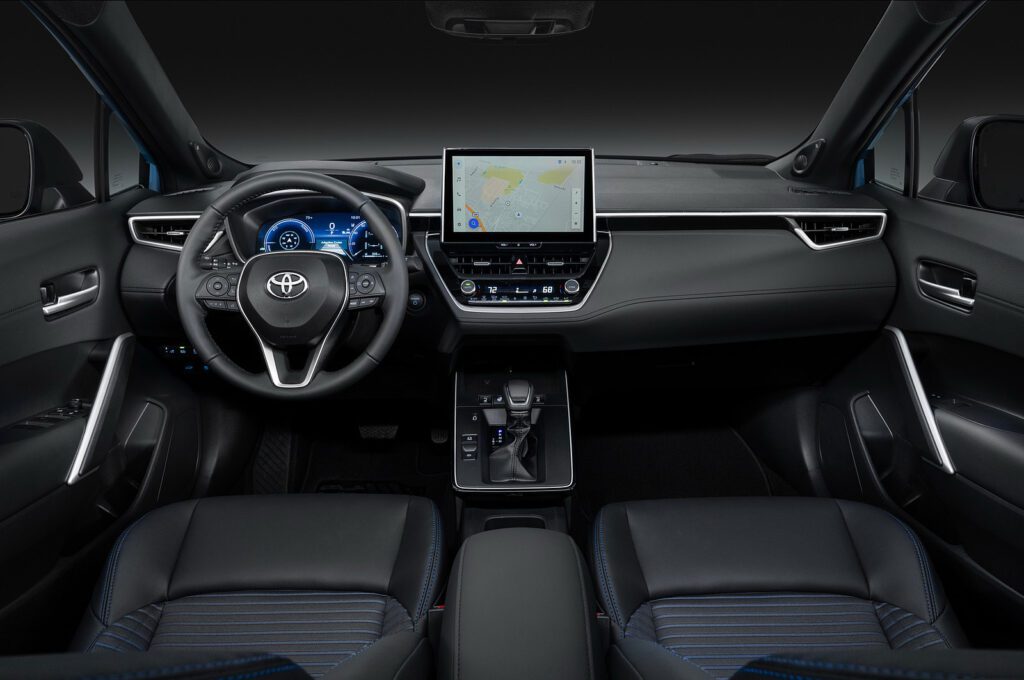
For a touch of style, the XLE introduces a new Portobello dashboard finish, and across the lineup wireless Apple CarPlay and Android Auto are standard. Connectivity is expanded with dual front USB-C ports, while LE, SE, XLE, and XSE add two more in back plus available Qi wireless charging. Music lovers can opt for a nine-speaker JBL audio system on XLE and XSE models.
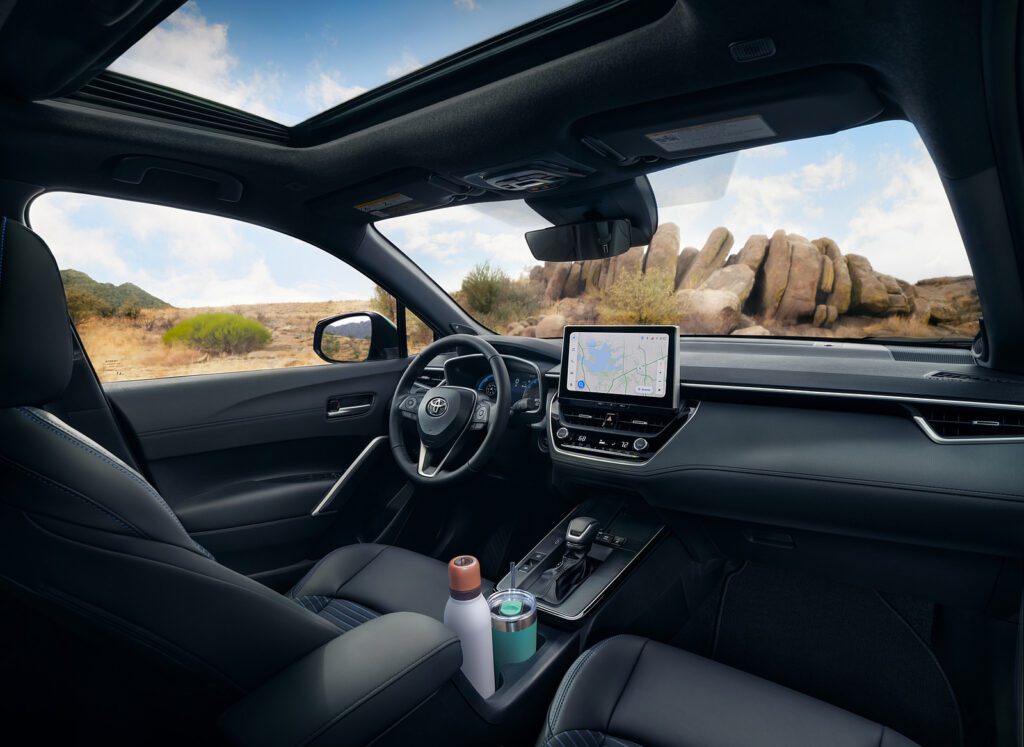
Comfort features also get reshuffled: a heated steering wheel and heated front seats are now standard on XLE AWD and Hybrid XSE, while remaining optional on LE AWD and SE.
Hybrid turns up the pace, gas model stays the value play
The hybrid range—S, SE, and XSE—adopts Toyota’s latest fifth-generation hybrid system. It combines a 2.0-liter four-cylinder with three electric motors and an electronically controlled CVT to produce 196 hp, good for a manufacturer-estimated 0–60 mph in 8.0 seconds. All hybrids include Electronic On-Demand AWD, and Toyota projects an impressive 42 mpg combined.
Gas-powered L, LE, and XLE trims carry over with the 2.0-liter Dynamic Force four-cylinder rated at 169 hp, paired to a CVT that features a physical first gear for smoother launches. Front-wheel-drive models are estimated at 32 mpg combined, while AWD versions return 30 mpg and gain Dynamic Torque Control, which can send up to 50 percent of power rearward when slip is detected. The figures don’t lead the class, but they remain competitive for the segment’s size and weight.
Trim walk and equipment highlights
L / S: Fabric upholstery, 8-inch touchscreen, Toyota Safety Sense 3.0, 60/40-split rear seat, and two front USB-C ports.
LE / SE: Add wireless phone charging, rear USB-C ports, blind-spot monitoring, and the option to upgrade to the 10.5-inch display or Cold-Weather Package.
XLE: Upgrades to SofTex seats, a power-adjustable driver’s seat, the 10.5-inch screen, and new 18-inch dark gray machined wheels. Also offers the nine-speaker JBL audio system and exclusive Portobello interior trim. On AWD versions, heated front seats and a heated steering wheel are standard.
XSE Hybrid: The sportiest pick, with a retuned suspension, two-tone roof option, gloss-black 18-inch wheels, SofTex/Mixed Media upholstery, JBL audio availability, and a standard cold-weather package.
Every Corolla Cross can tow up to 1,500 pounds with the dealer-installed hitch, and the optional power liftgate includes height memory—useful for low-clearance garages.
Safety, warranty, and what’s missing
Toyota equips every 2026 Corolla Cross with the latest Safety Sense 3.0 suite, bundling adaptive cruise control, lane centering, road-sign recognition, and proactive driving assist. Nine airbags are standard across the lineup, while XLE and XSE trims add front-and-rear parking sensors with automatic braking.
Coverage includes a 36-month/36,000-mile basic warranty, with hybrid components protected for 8 years/100,000 miles and the battery for 10 years/150,000 miles. Buyers also receive complimentary scheduled maintenance and roadside assistance for two years or 25,000 miles.
Pricing will be revealed closer to launch, but U.S. assembly in Alabama should help keep sticker shock in check—though reliance on imported components still leaves some exposure to tariffs.
Why this mid-cycle refresh matters
The 2026 Toyota Corolla Cross doesn’t try to rewrite the small-SUV playbook, but it does tackle the areas where the outgoing model fell short—bland styling and dated tech. With a sharper design, larger displays, and a stronger hybrid system, it’s more in step with current rivals. Add U.S. assembly that helps insulate pricing from tariff swings, and the refreshed Corolla Cross looks better prepared to hold its ground in one of the toughest segments on the market.